

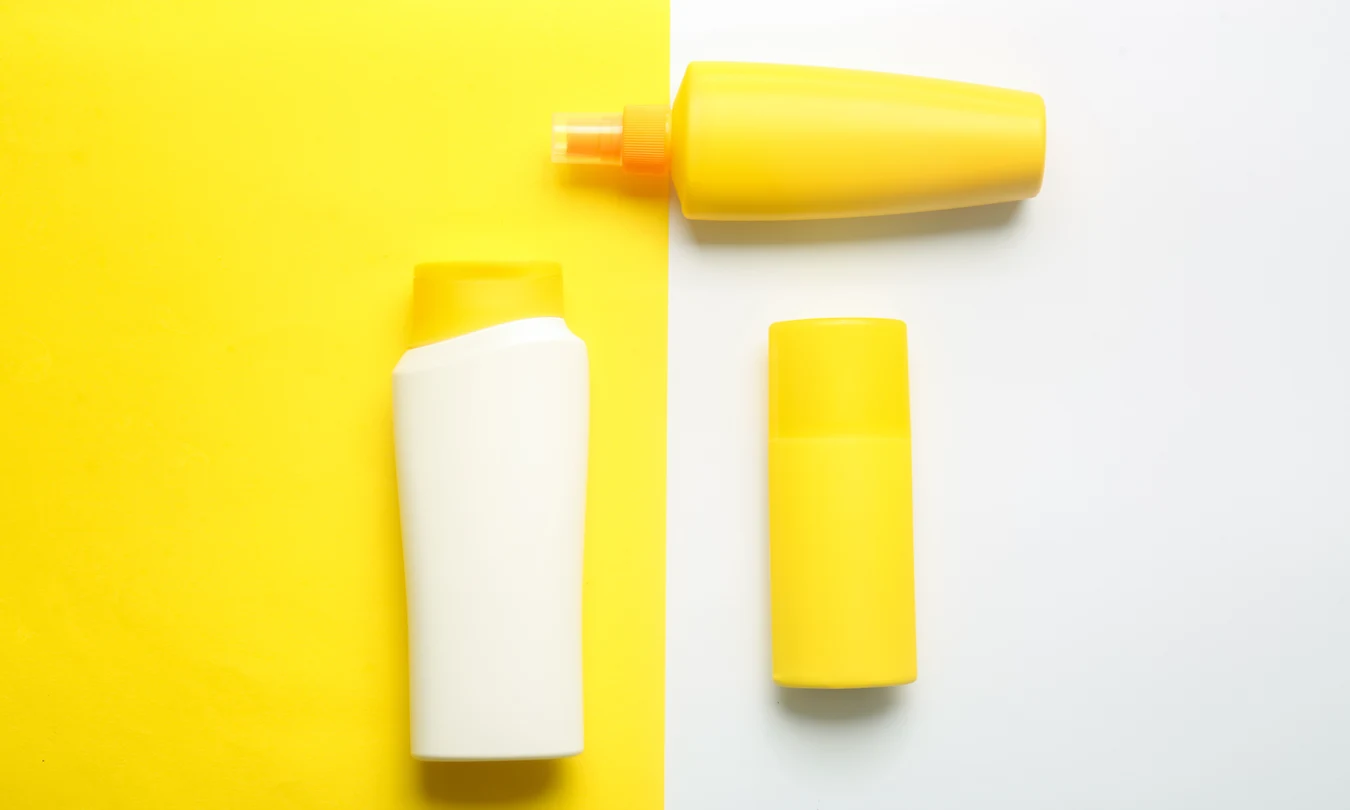
The right sun care package depends on the formula and how people apply it: aerosol and non-aerosol sprays for fast body coverage, tubes for manual applications, sticks for faces and on-the-go use, and pump bottles for family sizes. Whichever format fits, it still has to clear three hurdles before launch — heat and sun, sunscreen oils that interact with packaging materials, and an honest answer about what happens after use.
Sun care may be the toughest job in personal care packaging. The formula is built on oil-soluble ingredients that interact with plastics, the package spends its life in beach bags and hot cars, and in the U.S. the product inside is regulated as an over-the-counter drug. Choosing the format is the easy part. Qualifying it is where sun care launches succeed or stall.
Sun Care Formats at a Glance
| Format | Best for | Formula fit | Watch out for |
|---|---|---|---|
| Sprays | Fast full-body coverage, backs and legs, active kids | Thin alcohol-based or emulsion sprays; bag-on-valve for lotion-like sprays | Aerosol pressure rises with heat; flammable formulas; drift in wind |
| Tubes | Everyday lotions and creams for face and body | Emulsions across a wide viscosity range | Oil permeation, label staining, sand in closures |
| Sticks | Faces, kids, and travel | Solid wax- and oil-based formulas, including mineral sticks | Softening in heat; small label area |
| Pump bottles | Family sizes; airless pumps for face and mineral SPF | Pourable lotions; thick or sensitive formulas in airless | Viscosity vs. pump output; seal compatibility |
Sprays: Fast Body Coverage
Sprays are the fastest way to cover backs, legs, and kids who won't stand still. The first decision is whether the spray is pressurized: aerosol cans deliver the most continuous coverage, while non-aerosol mists skip the propellant and pressure entirely. See aerosol cans and mist sprayers on our Personal Care Page.
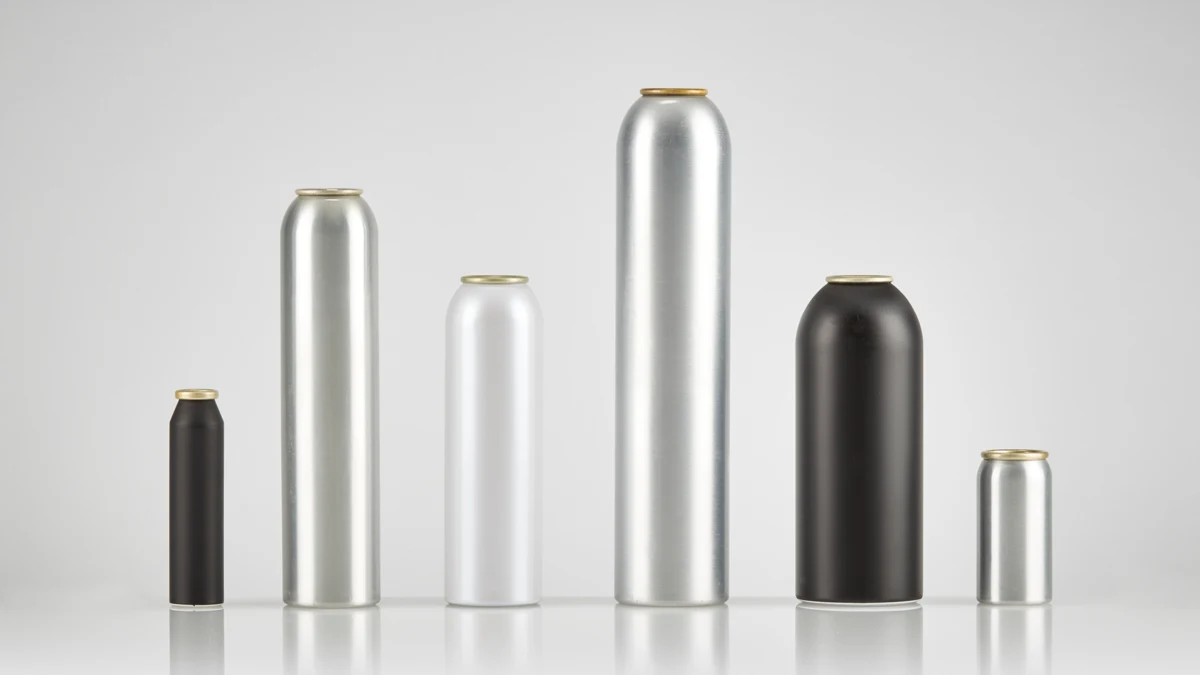
Aerosol or Non-Aerosol?
- Aerosol cans: The fastest, most continuous coverage. Continuous-spray and 360° valves keep spraying at any angle, including upside down, so consumers can reach legs and backs without contorting the can. The trade-off is engineering: the can, internal lining, valve, and actuator all have to be qualified together against the formula, and a pressurized can brings heat and transport rules with it.
- Bag-on-valve (BOV): An aerosol format that seals the formula inside a pouch, separated from the propellant. That allows compressed air or nitrogen in place of hydrocarbon propellants and lets the can dispense thicker, lotion-like sprays.
- Non-aerosol mists: Fine-mist sprayers and continuous trigger sprayers deliver a spray without a pressurized can, trading some output for no propellant and no pressure ratings to manage.
Aluminum or Tinplate?
For aerosol cans, the next choice is the metal:
- Aluminum monobloc: Seamless, lightweight, and corrosion-resistant. Aluminum doesn't rust — an advantage for a package that lives in wet, salty beach bags — and it offers more freedom in shaping and decoration, including embossing.
- Tinplate three-piece: Cost-effective and durable. Tinplate is steel under a tin coating and exterior finish, so a scratched can left wet can rust. Specify exterior coatings with beach conditions in mind.
Either way, the internal lining has to match the formula, because alcohol-based sprays and water-containing emulsions behave differently against metal. Our post on Aerosol Cans - From Artwork Proofing to Quality Control, covers lining options and how aerosol stability testing works.
When a Spray Is the Wrong Call
- Faces: The American Academy of Dermatology advises spraying sunscreen into the hands before applying it to the face. Sticks and lotions handle faces more directly.
- Wind: Spray drifts before it reaches the skin, and dermatologists advise against using sprays on windy days.
- Flammable formulas: Many alcohol-based sprays are labeled flammable, and the FDA advises staying away from open flames while applying or wearing them. That flammability also follows the product into storage and freight (more on that below).
- Mineral suspensions: Zinc oxide and titanium dioxide particles can settle and clog small orifices. Validate the valve and actuator, or the sprayer nozzle, with the actual formula; Evergreen's aerosol actuator orifices range from 0.3 to 0.8 mm.
Tubes: The Default for Lotions
Tubes handle most lotion and cream viscosities, squeeze down to the last application, and give brands a full 360° print surface, which is why they anchor the sun care aisle. Polyethylene is the most widely used plastic in sunscreen packaging, but the right tube structure depends on what the formula needs to keep in. See tube options on our Personal Care Page.
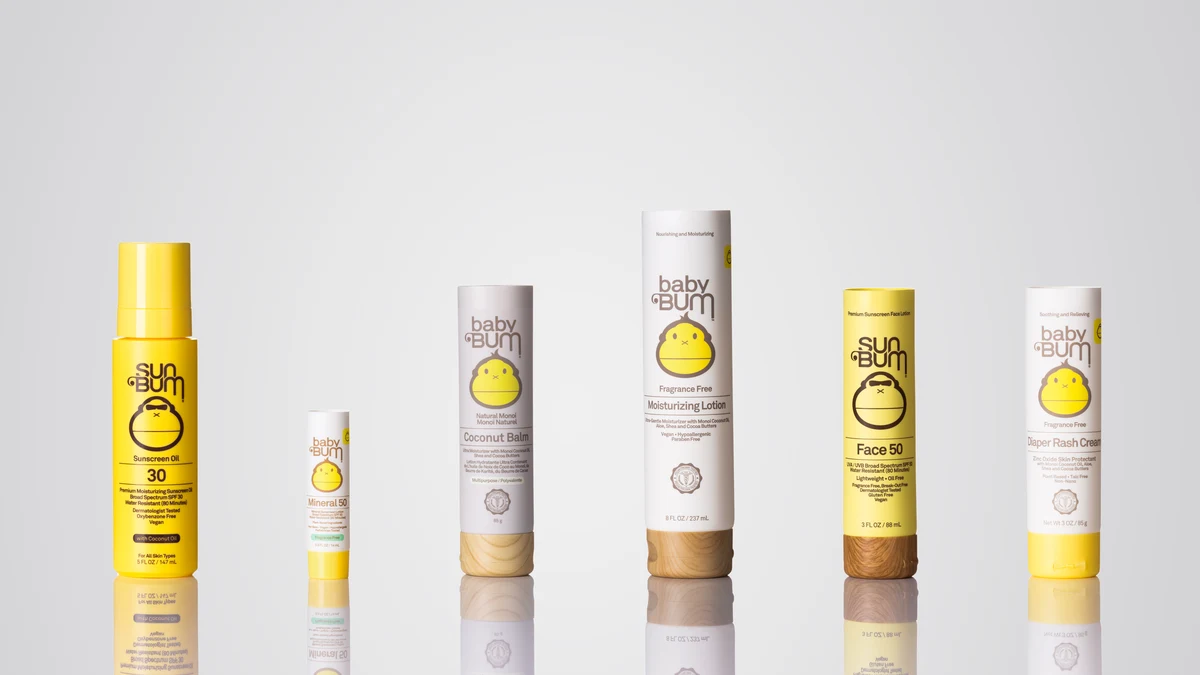
Mono-Layer, COEX, or Laminate?
- Mono-layer PE or PP: The workhorse for everyday emulsions.
- COEX with an EVOH barrier: Keeps fragrance and volatile ingredients in and oxygen out.
- Laminates (PBL and ABL): For formulas where shelf life is the constraint. Plastic barrier laminate (PBL) delivers barrier protection without an aluminum layer.
Polyethylene is itself lipophilic, meaning it can absorb oil-soluble ingredients, and low-density PE is a modest barrier. Oil-heavy formulas need testing for weight loss and label staining — and, as covered below, for UV filters migrating into the tube wall itself.
Closures That Handle Sand and Wet Hands
Flip-top and disc-top caps make one-handed use easy, but hinges and orifices collect sand and dried product. Match the orifice to the formula's viscosity, test the hinge and seal with product residue present, and consider induction seals to prevent leaks in transit.
Sticks: Faces and On-the-Go
Sticks avoid mess and hand contact, which makes them a favorite for faces, ears, noses, kids, and travel. For formats, mechanisms, and materials, see The Rise and Relevance of Stick Packaging in Personal Care and the stick options on our Personal Care Page.
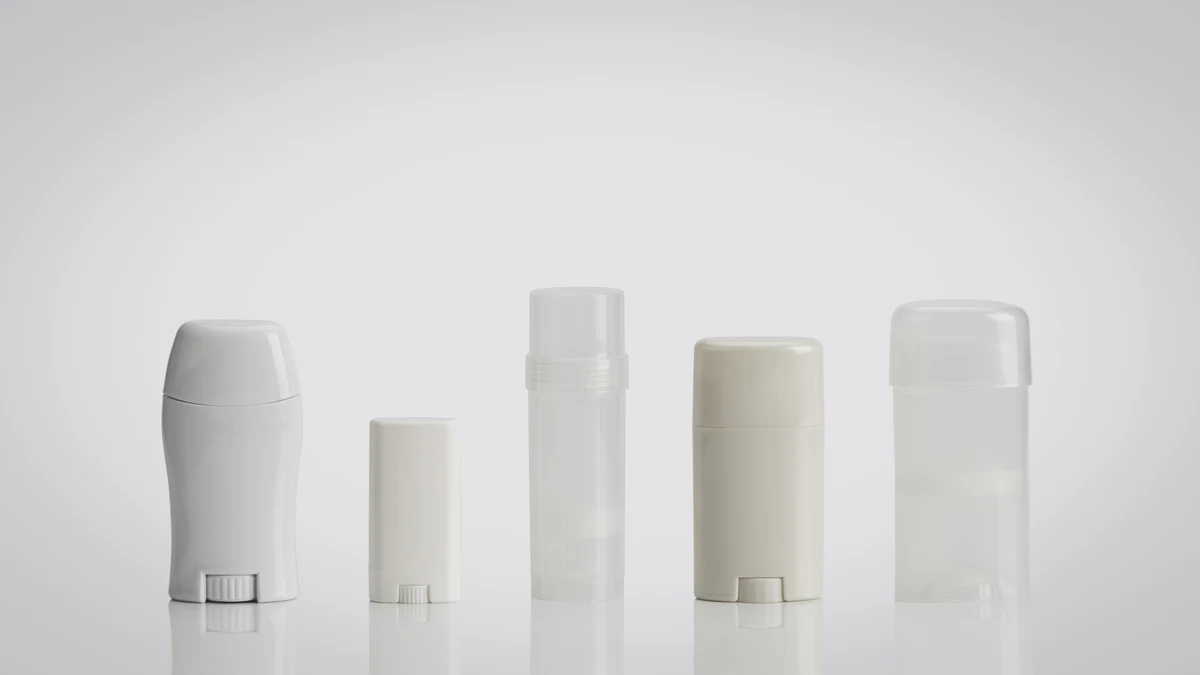
Sun care adds three considerations:
- Heat: Solid sunscreen bases are built from waxes and oils that soften in heat. Validate the twist-up mechanism and cap fit at elevated temperatures, and make sure the cap seals tightly enough to keep oils from sweating out.
- Component compatibility: Polypropylene tolerates waxes and oils well, but caps, shells, and decorative parts made from other plastics should be tested against the formula's UV filters.
- Label space: U.S. sunscreens carry a Drug Facts panel. FDA allows a modified format for small packages, but a small stick still offers the least label space of any format, so plan for extended-content labels or a carton before locking in the diameter and height.
Pumps: Family Sizes and Face SPF
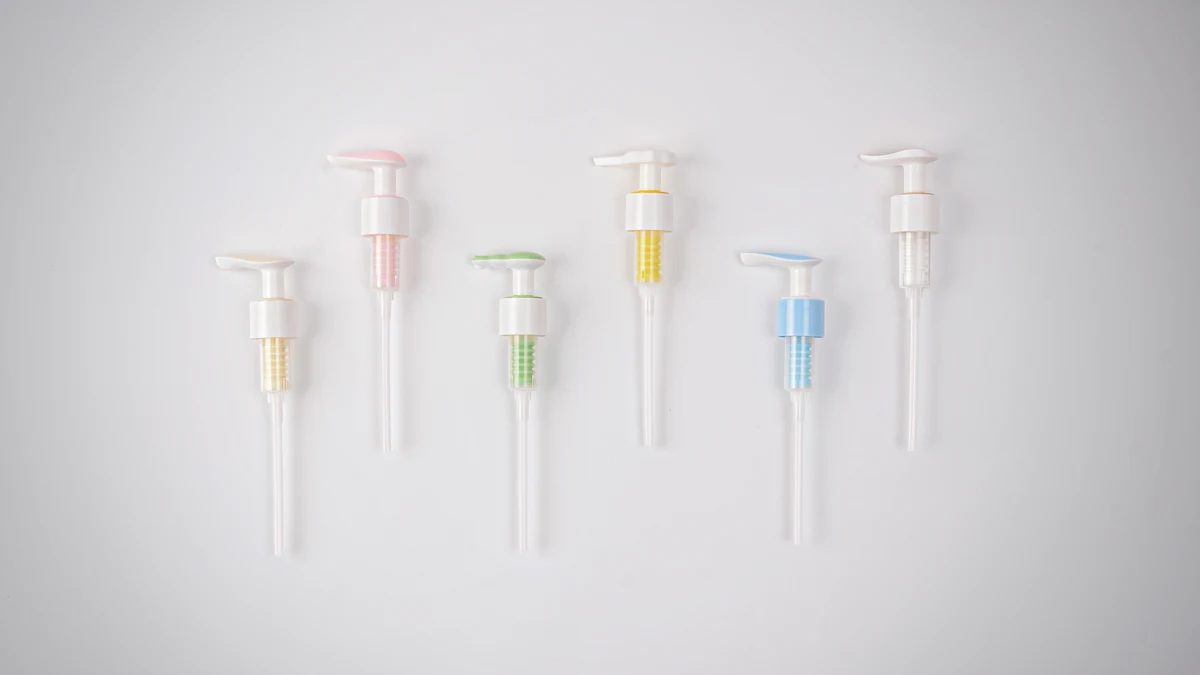
Family-size sunscreen pairs a large HDPE or PET bottle with a lotion pump: one hand, a consistent dose, and no squeezing or tipping a heavy container. A standard lotion pump delivers roughly 0.8–1.5 ml per stroke, and neck finish choice matters for thicker formulas — 28-410 and 33-410 finishes support higher-output pumps. Lock-down or twist-lock pumps keep bottles from dispensing in a beach bag.
For face and mineral SPF, airless pumps keep air out with a rising piston or collapsing pouch, dispense a precise dose, and empty more completely — useful for thick zinc formulas. Airless shells can be made from clear acrylic or AS, rigid plastics that should be tested against the formula's UV filters before launch. See pump and airless options on our Personal Care Page.
Heat and Sun: What the Package Has to Survive
U.S. sunscreen labels must tell consumers to "protect the product in this container from excessive heat and direct sun," and the FDA recommends wrapping containers in towels or keeping them in the shade. In practice, sun care packaging spends its life in exactly the conditions the label warns against: hot cars, beach bags, and pool decks. That makes heat a packaging specification, not just a storage tip.
- Aerosols: Internal pressure rises with temperature. Aerosol drug labels must warn against storage above 120°F, and U.S. transport rules set pressure limits measured at 130°F, with higher-pressure fills requiring stronger DOT 2P or 2Q cans. Our guide to Aerosol Packaging Compliance covers the pressure ratings.
- Tubes and plastic bottles: Heat speeds permeation, can push emulsions toward separation, and softens plastics and seals.
- Sticks: Wax and oil bases soften, putting stress on the mechanism and the cap seal.
- Sunlight: UV exposure fades print and degrades unprotected plastics over time. Clear plastics such as PET and acrylic let much of the sun's UVA through, so opaque packaging or UV absorbers in the pack help protect light-sensitive filters like avobenzone.
Flammable aerosols also carry storage and transport classifications that shape warehousing and freight. Plan for them when the format is chosen, not when the first shipment is booked.
Why Sunscreen Oils Need Compatibility Testing
If sunscreen can damage a car's interior, it can damage a package. Ford counts sun lotion among the products that can be "particularly damaging" to vehicle interiors, and its engineers test interior materials to withstand them. The same chemistry is at work inside the package: organic UV filters such as avobenzone, homosalate, octisalate, and octocrylene are lipophilic, and peer-reviewed research has found that the UV filter content of a sunscreen packed in polyethylene can drop over time as the filters interact with the plastic — reducing the protective effect.
In the U.S., that interaction is a regulatory question, too. FDA's drug manufacturing rules require containers that don't react with, add to, or absorb from the product, and stability testing in the same container-closure system the product is sold in. A packaging change isn't a swap made at the purchasing desk. It typically means new stability data on the new package.
Metal contact deserves its own check. Avobenzone reacts with iron, which is why sunscreen can leave orange, rust-colored stains on clothing washed in iron-rich water. Anywhere metal can touch the formula, such as an unlined steel surface or a metal pump spring in the product path, discoloration belongs on the test plan.
What a Sound Compatibility Test Covers
| Check | What it catches |
|---|---|
| Weight loss | Oils, water, or fragrance permeating through the walls |
| Appearance, color, and odor | Discoloration, separation, off-odors |
| Container integrity | Stress cracking, swelling, paneling, delamination |
| Closure torque and leakage | Back-off, liner swelling, leaks in transit |
| Valve and pump function | Swollen gaskets, clogging, inconsistent output |
| Can lining integrity | Corrosion and coating attack |
| Print and label rub | Decoration that wipes off with sunscreen-covered hands |
Testing has to run on production-process samples. As we covered in 3D-Printed Prototypes in Packaging Development, a prototype can't predict how a production container will behave with the formula. For aerosol cans and sprayers, Evergreen provides samples free of charge for stability testing before production, and our quality teams are onsite for every production run at facilities audited across 165 quality metrics.
The Honest Recyclability Trade-Offs
Every sun care format has a catch at end of life. The honest answer depends on what local programs actually accept, not on what a package is technically capable of.
- Aerosols: Empty steel and aluminum cans are recyclable where programs accept them, and acceptance varies by community. Consumers should empty cans through normal use, never puncture them, and check local guidelines. Valves, actuators, and bag-on-valve pouches are separate materials from the can.
- Tubes: HDPE tubes can be designed for recycling and earn recognition from the Association of Plastic Recyclers (APR), but recognition isn't collection. Check whether tubes are actually accepted where the product sells. The reliable gain is in the resin: PCR or sugarcane-based PE means less virgin fossil plastic per unit.
- Sticks: Small, multi-part packages are easy to lose in sorting. Mono-material PP and paperboard designs improve the odds; aluminum and hybrid shells are harder to recycle.
- Pump bottles and mist sprayers: The HDPE or PET bottle is usually recyclable. A conventional pump or sprayer with a metal spring and mixed resins usually isn't. Mono-material pumps with engineered polymer springs close that gap, as we covered in Innovations in Dispensing, and Evergreen offers APR-certified recyclable pumps.
Claims need the same honesty. Under the FTC's Green Guides, an unqualified "recyclable" claim requires recycling to be available to a substantial majority of consumers where the product is sold; otherwise, the claim needs a qualifier. For more on designing for recyclability, see The Rise of 100% Recyclable Mono-Material Plastic Packaging.
Choosing the Right Sun Care Format
There's no single best sun care package, only the right package for a given formula, use, and channel. Start with how the product will be applied, match the format to the formula, then qualify the package against the oils, heat, and sun it will actually face. Brands that do that up front avoid the costly discoveries — swollen pump seals, stained labels, corroded cans — that otherwise surface after launch.
To compare formats for your formula, explore our Personal Care Packaging Page or Get in Touch with our team.