

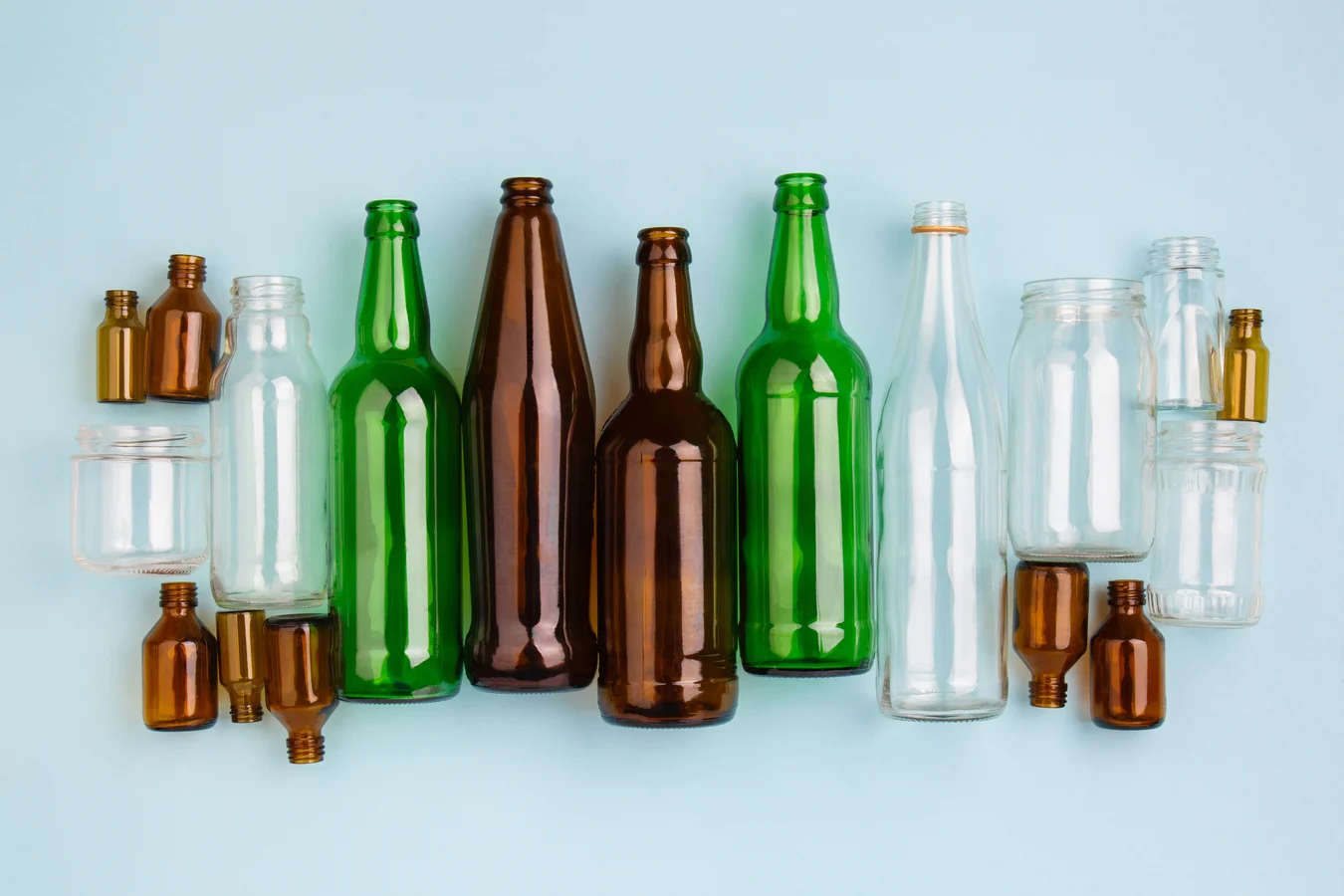
Glass is one of the most widely used packaging materials for food, beverage, cosmetic, pharmaceutical, and specialty chemical products. Its strong barrier performance, chemical stability, premium appearance, and recyclability make it a preferred material across many industries.
Although glass packaging may look similar from the outside, different glass types have different compositions, performance characteristics, and suitable applications. Understanding glass types and composition helps packaging teams select the right material for product protection, manufacturing performance, and regulatory compliance.
What Is Glass?
Glass is an inorganic, non-crystalline material produced by melting raw materials at high temperatures and cooling them into a solid form without crystallization. In packaging, glass is mainly used for bottles, jars, vials, ampoules, and specialty containers.
The most common glass packaging material is soda-lime glass, which is widely used for food, beverage, cosmetic, and household packaging. Other glass types, such as borosilicate glass and pharmaceutical glass, are used when higher chemical resistance, heat resistance, or product compatibility is required.
Basic Glass Composition
Most commercial glass is made from a combination of silica, fluxes, stabilizers, and small amounts of additives. Each component plays a specific role in the glass structure and manufacturing process.
- Silica Sand: Silica sand, mainly silicon dioxide, is the primary glass-forming material – it provides the basic structure of glass and contributes to hardness, chemical durability, and transparency. However, silica has a very high melting point, so other materials are added to reduce melting temperature and improve manufacturability.
- Soda Ash: Soda ash, mainly sodium carbonate, acts as a flux – it lowers the melting temperature of silica, making glass production more energy-efficient and practical for mass manufacturing. While soda improves melting efficiency, too much sodium can reduce the chemical durability of the glass. Therefore, stabilizers are needed to balance the composition.
- Limestone: Limestone, mainly calcium carbonate, acts as a stabilizer – it improves the chemical durability and mechanical strength of the glass, helping prevent the finished container from being too water-soluble or chemically unstable.
- Cullet: Cullet is recycled glass used as a raw material in glass production. It helps reduce energy consumption, supports recycling, and can improve melting efficiency. Clean and properly sorted cullet is important because contamination may affect color, quality, and furnace performance.
- Additives and Colorants: Small amounts of additives may be used to adjust glass color, UV protection, clarity, or processing performance. Common packaging glass colors include flint, amber, green, and blue. Color selection is not only an aesthetic decision – for some products, such as light-sensitive beverages or pharmaceutical products, amber or darker glass can provide better light protection.
The exact proportions of these raw materials are adjusted to meet the performance requirements of each application, from lightweight beverage bottles to light-protective pharmaceutical containers.
Glass Color and Packaging Performance
Glass color is an important design and functional consideration. Different colors are produced by adding small amounts of metal oxides or colorants during manufacturing.
Flint Glass
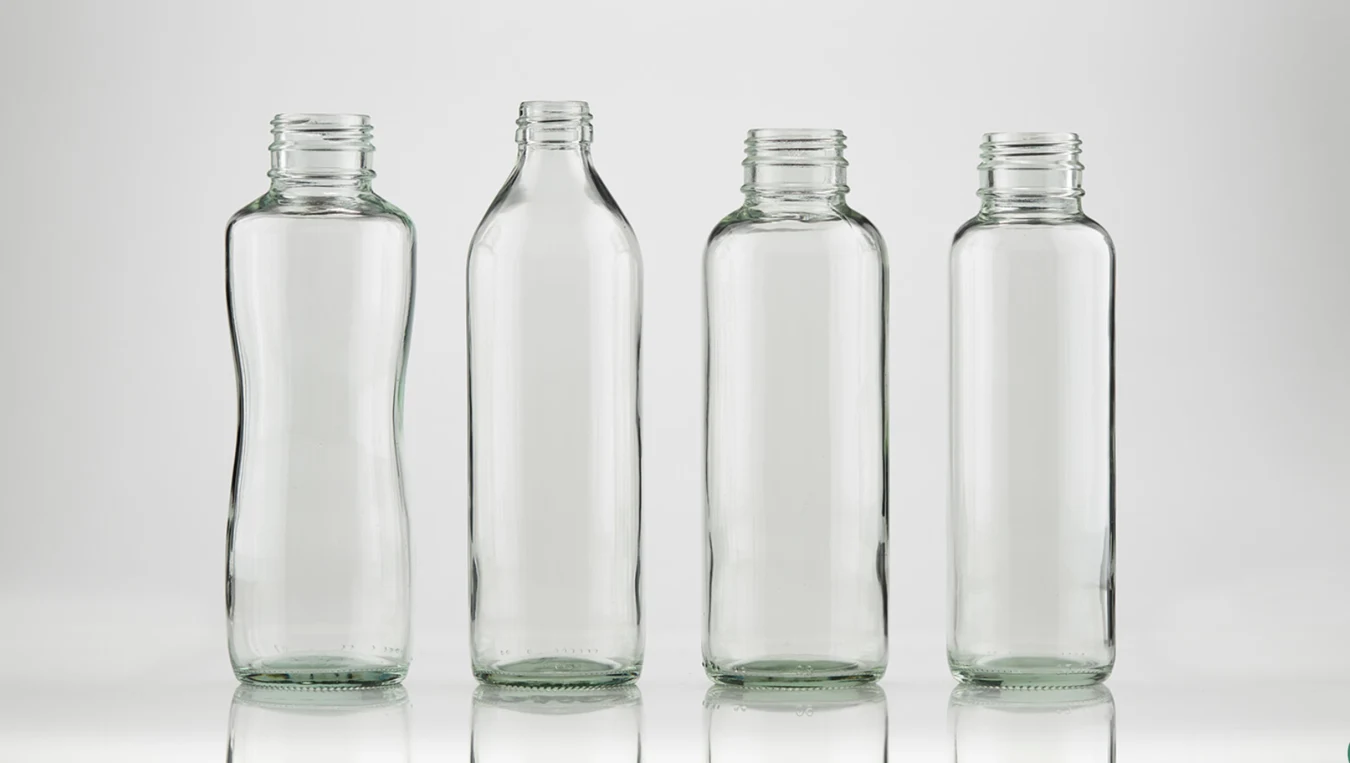
Flint glass is clear, colorless glass valued for its high transparency, making it the standard choice when product visibility is important — food jars, beverage bottles, spirits, cosmetics, and fragrances. Clarity is governed largely by iron oxide content in the raw materials: iron gives ordinary glass its faint greenish tint, so the lower the iron, the clearer the glass. Flint is produced in several grades to match different levels of clarity and cost.
- Regular Flint (Commercial Flint): Standard clear glass produced with conventional raw materials. It offers good transparency at the lowest cost and runs efficiently on high-speed automated lines, making it the practical choice for the majority of clear packaging — food jars, standard beverage bottles, and mass-market spirits. A subtle green or blue tint may be visible in thicker sections or at the base, but this is rarely noticeable once the container is filled and labeled.
- High-Grade Flint (High Flint / Low-Iron): A brighter, clearer glass made with purer raw materials and reduced iron content. It delivers noticeably better light transmission and a cleaner, more colorless appearance than regular flint, with less visible tint. This grade strikes a balance between cost and premium appearance, making it popular for mid-to-high-end spirits, cosmetics, and any application where product visibility and shelf appeal matter.
- Ultra-Clear Flint (Extra Flint / Super Flint): The highest clarity grade, produced with very low-iron silica and precise manufacturing control to eliminate visible tint — even in thick-walled or heavy-based bottles. It offers maximum brilliance and light transmission, allowing the true color of the product to show without distortion. Ultra-clear flint is the preferred choice for luxury spirits, limited editions, and premium fragrance packaging, where visual impact justifies the higher material and production cost.
Because naming conventions vary between manufacturers, the grade labels alone aren't a reliable guide — one supplier's high-grade flint may look nearly identical to another's ultra-clear flint, while two bottles sold under the same name can differ visibly in tint and brilliance. For this reason, evaluating the physical glass matters more than the grade name. Buyers should confirm clarity expectations against physical or filled samples before committing to full production.
Amber Glass
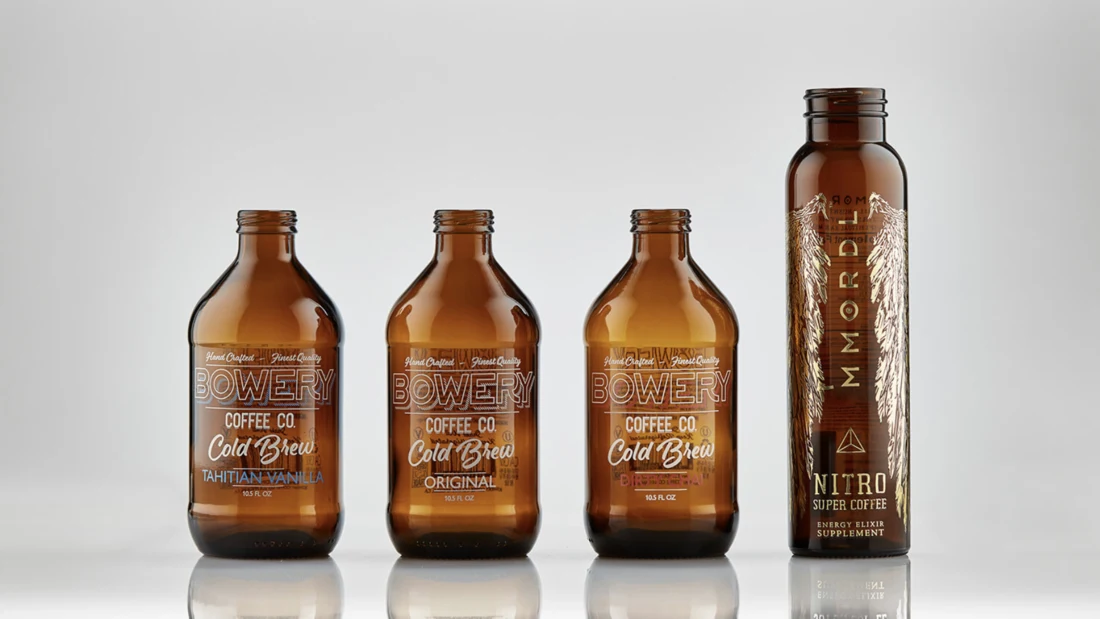
Amber glass is colored brown glass used primarily to protect light-sensitive products from UV and visible blue light. Where flint glass is chosen for visibility, amber is chosen for protection — the color acts as a filter, blocking much of the shorter-wavelength light that degrades contents through oxidation, spoilage, or loss of potency. This makes it a standard choice for products that break down when exposed to light.
The color comes from adding iron, sulfur, and carbon to the glass batch. These additives shift the glass toward the brown end of the spectrum and give it its filtering properties, screening out a significant portion of UV and blue light while still allowing the container to be tinted to different depths. Lighter ambers offer moderate protection with better product visibility, while darker ambers provide stronger light blocking at the expense of seeing the contents.
Typical applications include:
- Beer and certain other beverages prone to light damage
- Pharmaceutical bottles and vials for light-sensitive medications
- Nutraceuticals, supplements, and essential oils
- Some food products, sauces, and specialty oils
The main tradeoff with amber glass is protection versus presentation. It shields the product effectively but hides the contents, which limits its use where product visibility drives shelf appeal. It also blocks a specific range of wavelengths rather than all light, so for highly sensitive formulations, amber is often paired with secondary packaging or opaque outer cartons for full protection. Where light exposure is the primary concern, though, amber remains the most practical and widely used glass color.
Green Glass
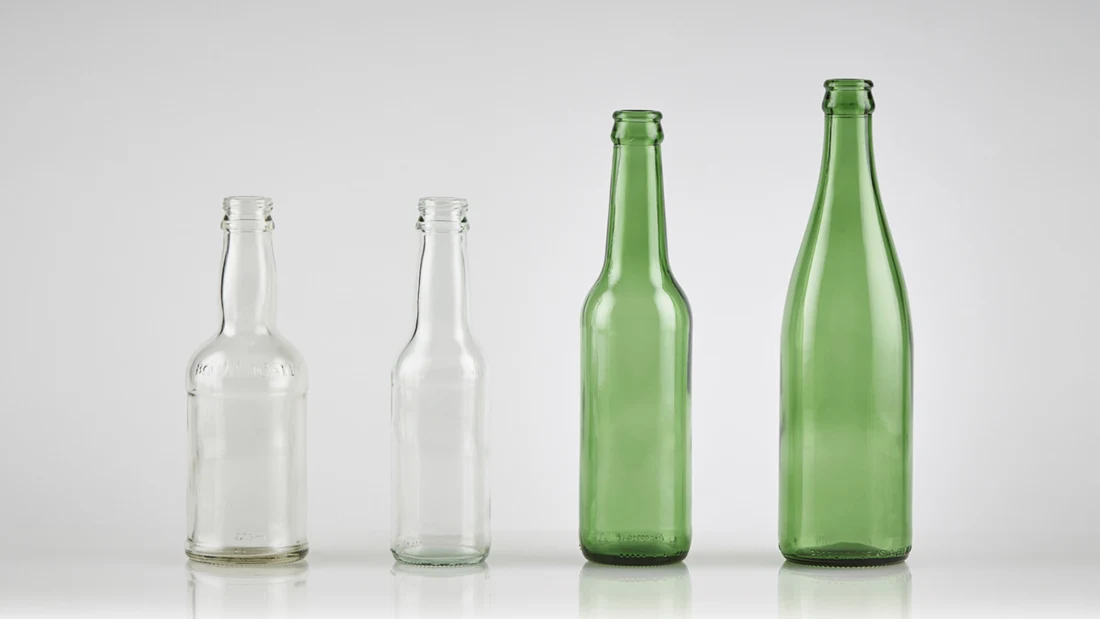
Green glass is colored glass used in packaging for a combination of light protection and visual identity, most prominently in the wine and beer industries. Like amber, green filters out a portion of UV and visible light that can degrade contents, though it generally offers less protection than amber. Its color comes from trace elements such as iron and chromium added to the glass batch, and by varying these the glass can be produced in a range of shades — each carrying its own aesthetic association and level of light filtering.
Common green shades in packaging include:
- Emerald Green: A bright, vivid green with strong visual appeal. It's a popular choice for sparkling wines, Champagne, and beverages where shelf presence and a lively color are priorities. Emerald offers moderate light protection while keeping a bright, premium appearance.
- Champagne Green: A darker, traditional green associated with Champagne and sparkling wine production, as well as many German and Austrian whites. It provides stronger UV filtering than lighter greens — screening out a substantial share of damaging light wavelengths — making it a functional choice where light protection matters alongside tradition.
- Antique Green: A deep, slightly muted green that is one of the most common wine bottle colors in the U.S. and Europe. Traditionally used for Bordeaux reds, it provides solid UV protection to guard against fading and oxidation during aging, while conveying an established, classic look.
- Dead Leaf Green: A brownish-green shade (also called feuille morte) traditionally used for French Burgundian wines such as Chardonnay and Pinot Noir. It combines meaningful light protection with a heritage aesthetic tied to Old World winemaking.
- Dark Green: The deepest standard green, offering the strongest light protection in the green family. It's chosen where UV defense is a priority but a fully brown amber is not the desired look — common for premium and age-worthy wines and some specialty beverages.
As a general rule, the darker the green, the more light protection it provides, so shade selection means choosing from these established options to best balance the desired look against how light-sensitive the product is.
Cobalt Blue Glass

Cobalt blue glass is a deep blue colored glass used in packaging for a mix of light protection and strong visual identity. The color comes from adding cobalt oxide to the glass batch, which produces a rich, saturated blue even in small quantities. Cobalt offers moderate UV protection — more than clear glass, though generally less than amber — while giving a product a distinctive, premium look on the shelf.
Cobalt blue is most associated with premium and specialty positioning. Its striking color stands out in categories where appearance drives purchasing, which is why it appears frequently in beauty, personal care, and wellness products, as well as some premium spirits, mineral waters, and specialty foods. The color carries associations of calm, purity, and quality, making it a common choice for brands aiming for an upscale or distinctive presentation.
Typical applications include:
- Skincare, cosmetics, and personal care products
- Aromatherapy and essential oil bottles
- Premium spirits and specialty beverages
- Certain pharmaceutical and wellness products
The main tradeoff with cobalt blue is that it's chosen primarily for appearance rather than maximum protection. It provides some light filtering but does not match amber for shielding highly light-sensitive contents, so for very sensitive formulations it may need to be paired with secondary packaging. Like other glass colors, cobalt is set at the furnace level and offered as a standard stock color rather than customized per run — so availability depends on a manufacturer's production schedule and the volumes involved.
Opal (Opaque White) Glass

Opal glass is an opaque white glass, also known as milk glass, valued for a soft, minimalist appearance combined with meaningful light protection. Unlike colored glasses that filter light through a dark tint, opal glass achieves its effect through opacity — its milky-white body blocks light from passing through, shielding contents while presenting a clean, premium look. This makes it a popular choice in skincare and premium personal care.
Opal glass gets its opaque white color from mineral additives — typically fluorides — introduced during melting, which cloud the otherwise clear glass into a uniform white. The finish can be glossy or matte, and the neutral white surface pairs well with a wide range of closures, labels, and decoration, giving brands flexibility in how the final package looks.
Typical applications include:
- Premium skincare, creams, and serums
- Lotions and moisturizers
- Home fragrance and diffuser bottles
- Clean-beauty and minimalist personal care lines
The main consideration with opal glass is that while its opacity provides solid light protection, it generally offers less complete shielding than amber glass for the most light-sensitive formulations. It's often chosen where aesthetic and a soft, high-end look weigh alongside protection. As with other glass colors, opal is produced as a standard furnace color rather than a per-project custom tint.
Custom Colors via Color Spray

Unlike plastic, where color can be customized per production run, glass color is set at the furnace level. A glass furnace runs continuously and melts a single color at a time, feeding many products — and often many customers — simultaneously, so the color is a shared condition of the entire furnace rather than something dialed in per project. Because switching a furnace's color is a slow, costly process, manufacturers work from a limited set of standard stock colors.
When a color outside the standard options is needed, it's typically achieved through color spray — applying a colored coating to the surface of clear flint glass rather than coloring the glass itself. A flint bottle serves as a blank base, and the desired color is sprayed onto it and cured, so the tint lives in the coating rather than the glass body. Because the color is applied per project rather than melted into the furnace, spray coating opens up a far wider palette than stock glass colors allow — including precise brand-matched shades, gradients, and finishes like glossy, matte, or soft-touch.
This approach makes effectively any color achievable, which is why color spray is often used for branding, premium appearance, or product differentiation. Black, opal-style whites, and custom brand colors are all commonly produced this way when a matching furnace color isn't available or practical for the volume.
Common uses:
- Cosmetic packaging
- Fragrance bottles
- Specialty personal care products
- Decorative packaging
A key consideration with sprayed color is that the finish is a surface coating, so factors like durability, scratch and chemical resistance, and recyclability can differ from through-colored glass. For products with demanding handling, filling, or sustainability requirements, it's worth confirming that the coating suits the application. For finish options, color matching, and application details, see our color spray capabilities page.
Types of Glass Used in Packaging
Glass is categorized in two different ways. Most types are defined by composition — the raw materials that determine how the glass performs. Pharmaceutical glass is different: it’s defined by application and performance, and it’s built from the composition types below rather than being a separate material of its own. Keeping this distinction in mind makes the categories easier to navigate.
1. Soda-Lime Glass
Soda-lime glass is the most common glass type used in packaging. It is made primarily from silica, soda ash, and limestone.
Typical applications include:
- Food jars
- Beverage bottles
- Cosmetic bottles and jars
- Fragrance bottles
- Household product containers
Soda-lime glass is cost-effective for large-scale production and provides good clarity, appearance, and general chemical resistance. It is suitable for many food and beverage packaging applications and is highly recyclable, making it a practical choice for standard commercial packaging.
However, soda-lime glass has lower thermal shock resistance compared with borosilicate glass and may not be suitable for highly aggressive chemical products. Proper annealing is also required during manufacturing to reduce internal stress and improve container strength. Overall, soda-lime glass is typically the first choice for standard packaging applications where extreme heat resistance or high chemical resistance is not required.
2. Borosilicate Glass
Borosilicate glass contains boron oxide in addition to silica and other components. This composition gives it better thermal shock resistance and chemical durability compared with standard soda-lime glass.
Typical applications include:
- Laboratory glassware
- Pharmaceutical containers
- High-temperature applications
- Specialty food or beverage containers
- Products requiring stronger chemical resistance
Borosilicate glass provides excellent thermal shock resistance and strong chemical durability. It performs better under temperature changes and is suitable for demanding applications where product safety, heat resistance, or chemical compatibility is critical.
The main considerations for borosilicate glass are its higher material and processing cost, as well as its more limited use in standard mass-market packaging. It may also require specialized manufacturing capability. Borosilicate glass is preferred when temperature resistance or chemical compatibility requirements exceed the capability of standard soda-lime glass.
3. Lead Glass / Crystal Glass
Lead glass, sometimes called crystal glass, contains lead oxide or other metal oxides to improve brilliance, refractive index, and decorative appearance.
Typical applications include:
- Decorative glassware
- High-end decanters
- Premium gift items
- Specialty display products
Lead glass provides high clarity, strong brilliance, and good optical properties. It is often used where decorative appearance and premium visual quality are more important than standard packaging performance.
However, lead glass is not used for primary food or beverage packaging, because prolonged contact with acidic or alcoholic contents can cause lead to leach into the product at levels exceeding food-safety limits. While premium spirits and wines are sometimes served or short-term decanted in lead crystal, this applies to serving vessels — not storage or shelf packaging, where extended contact time makes leaching a regulatory and safety concern. For packaging applications, lead glass is generally limited to decorative products with no food contact.
Pharmaceutical Glass: A Performance Classification
Unlike the categories above, pharmaceutical glass is not a distinct composition — it's a functional classification for glass used in drug and healthcare packaging, where chemical stability and product compatibility are critical. It draws on the composition types already described: the highest-performance tier is typically borosilicate, while lower tiers use soda-lime glass. Rather than being grouped by what it's made of, pharmaceutical glass is classified by hydrolytic resistance — the glass's ability to resist releasing soluble substances when it contacts water or aqueous solutions. Higher hydrolytic resistance means better chemical durability and lower risk of interaction between the container and the drug product.
Common hydrolytic resistance types include:
- Type I Glass: Typically borosilicate glass, with the highest hydrolytic resistance. Used for sensitive injectable drugs, vials, ampoules, and other high-risk applications.
- Type II Glass: Usually treated soda-lime glass with improved surface durability. Used for certain aqueous pharmaceutical products where moderate chemical resistance is acceptable.
- Type III Glass: Standard soda-lime glass with lower hydrolytic resistance. Generally used for less sensitive products, such as non-aqueous formulations, oral liquids, or dry products.
Pharmaceutical glass offers high chemical resistance and is designed to support sensitive drug products. It also provides better control of extractables and leachables performance, making it suitable for applications where product purity and regulatory compliance are important.
Because pharmaceutical glass is used in highly controlled applications, it requires strict quality control and must meet applicable pharmaceutical standards. Selection should be based on product formulation, sterilization process, storage condition, and compatibility testing.
Selecting the Right Glass Type
Choosing the right glass comes down to matching the material to the product it will hold, the process it must survive, and the way it will be presented and shipped. No single glass type is best for every application, so selection is a balance across several factors.
Key considerations include:
- Product compatibility: The formulation itself — its chemistry, acidity, and light sensitivity — determines how chemically durable the glass needs to be and whether a protective color is required.
- Regulatory requirements: Food-contact or pharmaceutical applications carry compliance and hydrolytic-resistance requirements that narrow the suitable glass types.
- Process demands: Filling temperature, hot-fill, and sterilization processes dictate the thermal shock resistance the glass must have.
- Physical performance: Closure compatibility, plus transportation and drop resistance, affect durability and how the finished package holds up in handling and shipping.
- Branding and decoration: Clarity, color, and finish requirements shape both the glass type and any surface decoration or coating.
- Sustainability and supply: Recyclability and environmental goals, alongside cost and supply availability, factor into the final choice.
For most standard packaging applications, soda-lime glass offers the best balance of cost, performance, and manufacturability, which is why it's the default for the majority of food, beverage, and personal care products. More demanding products move up from there: borosilicate where thermal shock or chemical resistance is critical, and pharmaceutical-grade glass where hydrolytic resistance and regulatory compliance govern the selection. The right choice is the one that meets the product's real requirements without paying for performance it doesn't need.
Getting that balance right is where an experienced packaging partner makes the difference. Evergreen works with brands across food and beverage, personal care, beer, wine and spirits, and pharmaceuticals to match glass type, color, and decoration to each product's specific requirements — from standard soda-lime containers to specialized formats for light-sensitive or regulated products. With a global manufacturing network of 150+ qualified facilities and QC engineers onsite at all productions, Evergreen helps brands source the right glass at scale, with the quality oversight to back it up. Get in touch with Evergreen's team to discuss your glass packaging requirements.
FAQs
What is the most common type of glass used in packaging?
Soda-lime glass is the most common type used in packaging, made primarily from silica, soda ash, and limestone. It offers a practical balance of cost, clarity, and recyclability for food, beverage, and personal care containers.
What is the difference between borosilicate and pharmaceutical glass?
Borosilicate is defined by composition — it contains boron oxide, giving it high thermal shock and chemical resistance — while pharmaceutical glass is a performance classification for drug packaging, graded by hydrolytic resistance. The highest pharmaceutical tier (Type I) is typically borosilicate, but Types II and III are soda-lime based, so not all pharmaceutical glass is borosilicate.
What are the types of pharmaceutical glass?
Pharmaceutical glass is classified into three types by hydrolytic resistance: Type I (typically borosilicate, highest resistance, for injectables and vials), Type II (treated soda-lime, moderate resistance), and Type III (standard soda-lime, lower resistance, for less sensitive products).
What color glass offers the best light protection?
Amber glass offers the best light protection among standard glass colors, filtering out most UV and visible light that can degrade sensitive contents. Green provides moderate protection, while flint (clear) glass offers the least. For protection beyond amber, black glass can be used, though it isn't a standard furnace color.
Why is amber glass used for packaging?
Amber glass is used to protect light-sensitive products from UV and visible light that can cause degradation, spoilage, or loss of potency. It's a standard choice for beer, pharmaceuticals, essential oils, and supplements.
What is flint glass?
Flint glass is clear, colorless glass valued for high transparency, used when product visibility matters. Its clarity depends largely on iron content and is produced in grades ranging from regular commercial flint to ultra-clear (extra/super flint).
Can glass be made in custom colors?
Glass color is set at the furnace level from a limited set of standard stock colors, so true custom colors are usually achieved by spraying a colored coating onto clear flint glass. This allows precise brand-matched shades and finishes without a dedicated furnace color.
How do I choose the right glass type for my product?
Choosing the right glass depends on the product's chemistry, light sensitivity, filling and sterilization process, compliance requirements, and branding needs. Soda-lime works for most standard applications, while borosilicate or pharmaceutical-grade glass is used for thermally or chemically demanding products.