

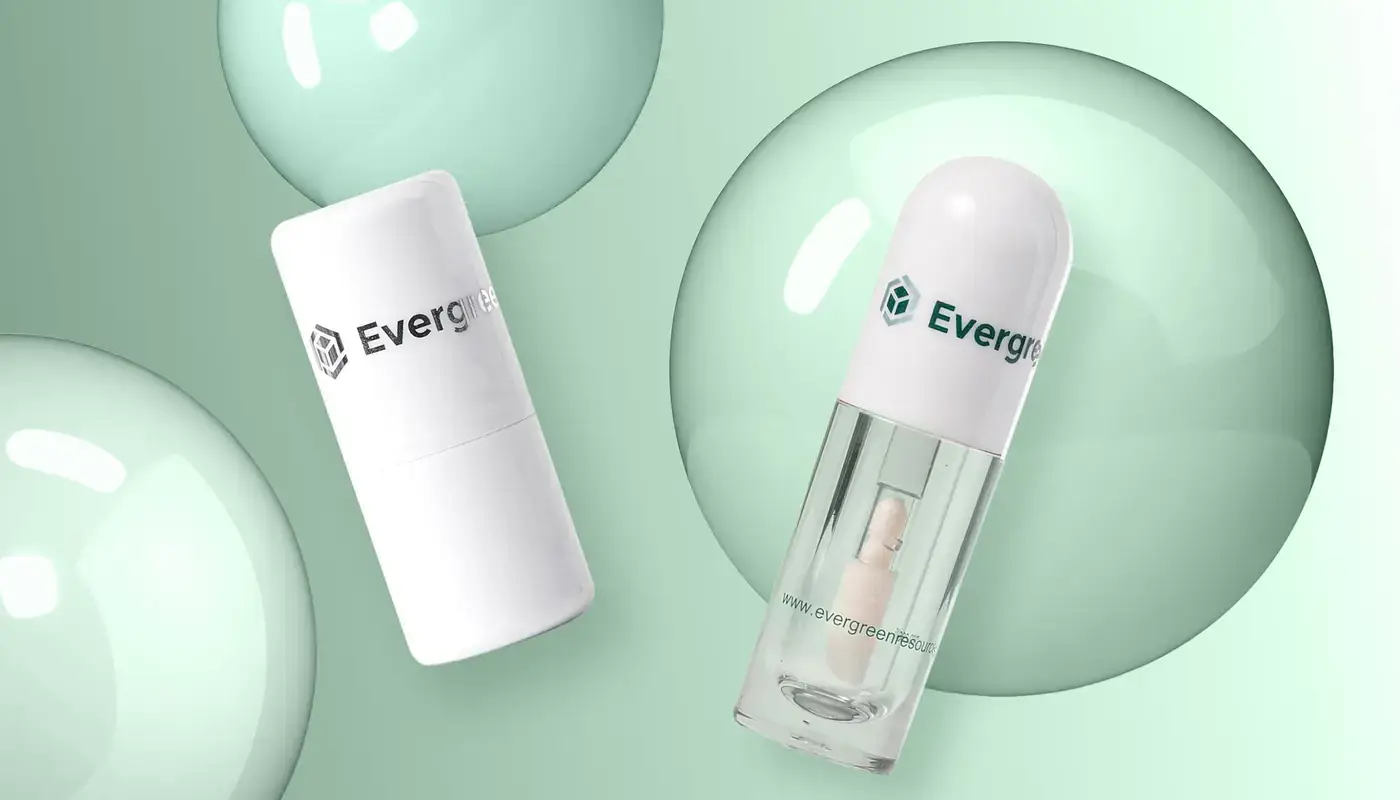
This guide covers the five methods Evergreen Resources offers that carry a design on a die, a film, or a label, across glass, plastic, and metal. For ink applied directly to the container, see our Printing Methods Guide. For coatings, frosting, and metallization, see our Textures & Coatings Guide.
What’s in this guide:
- Why this is a procurement decision, not just a design one
- Comparison table
- The five methods
- Combining these methods with other techniques
- How to choose: a five-step framework
- Sustainability & recyclability considerations
- Get the commitment right the first time
Printing lays ink onto a container. Coatings change its surface. This group works differently from both: the design is finished before it ever meets the package.
A decal is printed on film, a foil is manufactured on a carrier, an in-mold label is printed and cut, and an embossed logo is cut into a mold. That single fact drives everything that matters commercially — what it costs to change your mind, how long a new SKU takes to launch, and whether the decoration can ever come off the pack.
Why this is a procurement decision, not just a design one
Every method in this group sits at the intersection of four constraints:
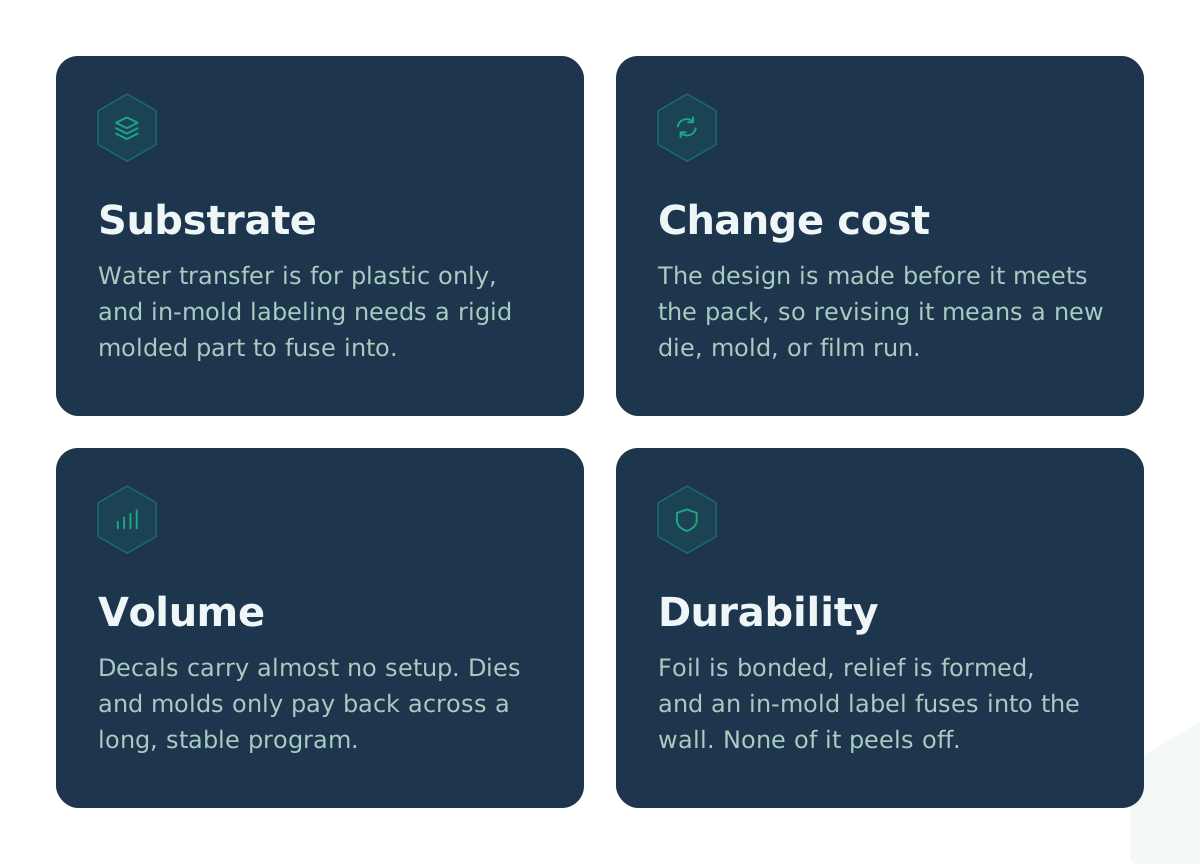
- Substrate. Glass, plastic, and metal accept different processes. Water transfer is essentially a plastic process. In-mold labeling requires a rigid molded part for the resin to fuse the label into, which rules out glass and metal entirely. Foil and relief reach all three. Getting this wrong wastes sampling cycles before a proof is approved.
- Change cost. This is the constraint that separates this category from the other two, and it is the one that surprises teams. Because the design is made in advance, revising it means a new die, a new mold, or a new print run of film or labels — not simply a new plate. An embossed logo is cut into tooling and cannot be edited. An in-mold label change means reprinting label stock, not adjusting a file. Decide how often the artwork will move before you decide the method.
- Volume and MOQ. Decals carry almost no setup and suit short, frequent, or seasonal programs. Dies and molds only pay back across a long, stable program, and the payback math is per SKU, so a portfolio of many products multiplies the commitment.
- Durability. This is the category’s strongest argument. Foil is bonded, relief is formed, and an in-mold label is fused into the container wall — none of them sit on the surface waiting to scuff. Water transfer is the softest of the five, because the printed film relies on a clear top coat for its protection.
Evergreen builds decoration into production rather than treating it as an afterthought, with dielines for all product categories, digital artwork proofing in 3 business days, physical color samples in 7–14 business days, and QC engineers onsite at every production. That integration matters here because tooling decisions are effectively irreversible once cut.
Comparison table
The table below summarizes how each method maps to substrate, visual effect, relative cost, durability, and best use case. "Relative cost" reflects setup plus unit economics; in this category setup dominates, because dies, molds, and label print runs are all committed before the first unit ships.
| Technique | Glass | Plastic | Metal | Visual effect | Relative cost | Durability | Best for |
|---|---|---|---|---|---|---|---|
| Decal / heat transfer | Photographic, multicolor, conforms | Low setup | Moderate–high | Short runs, complex shapes, limited editions | |||
| Water transfer | Full-surface patterns (wood grain, etc.) | Moderate | Moderate | 360° patterns on irregular shapes | |||
| Hot stamping | Metallic/holographic foil, 1–3 colors | Moderate (die) | High | Gold/silver logos, accents | |||
| Embossing/debossing | Raised/recessed tactile relief | Tooling-driven | Permanent | Logos formed into the pack | |||
| In-mold labeling (IML) | rigid | Photo-quality, seamless, no-label look | High (molding) | Very high | High-volume rigid plastic |
The five methods
Decal / heat transfer
A decal is a pre-printed film carrying ink and adhesive that is applied by pressure, heat, or water activation. It "enables the direct transfer of vibrant, multi-color images, detailed logos, and fine text," conforms to "curved, textured, or irregular products not easily decorated by direct printing methods," and is "ideal for short production runs, limited editions, or customized packaging, with minimal setup and tooling costs." It works on plastic, glass, and metal and is engineered for abrasion, chemical, and moisture resistance.
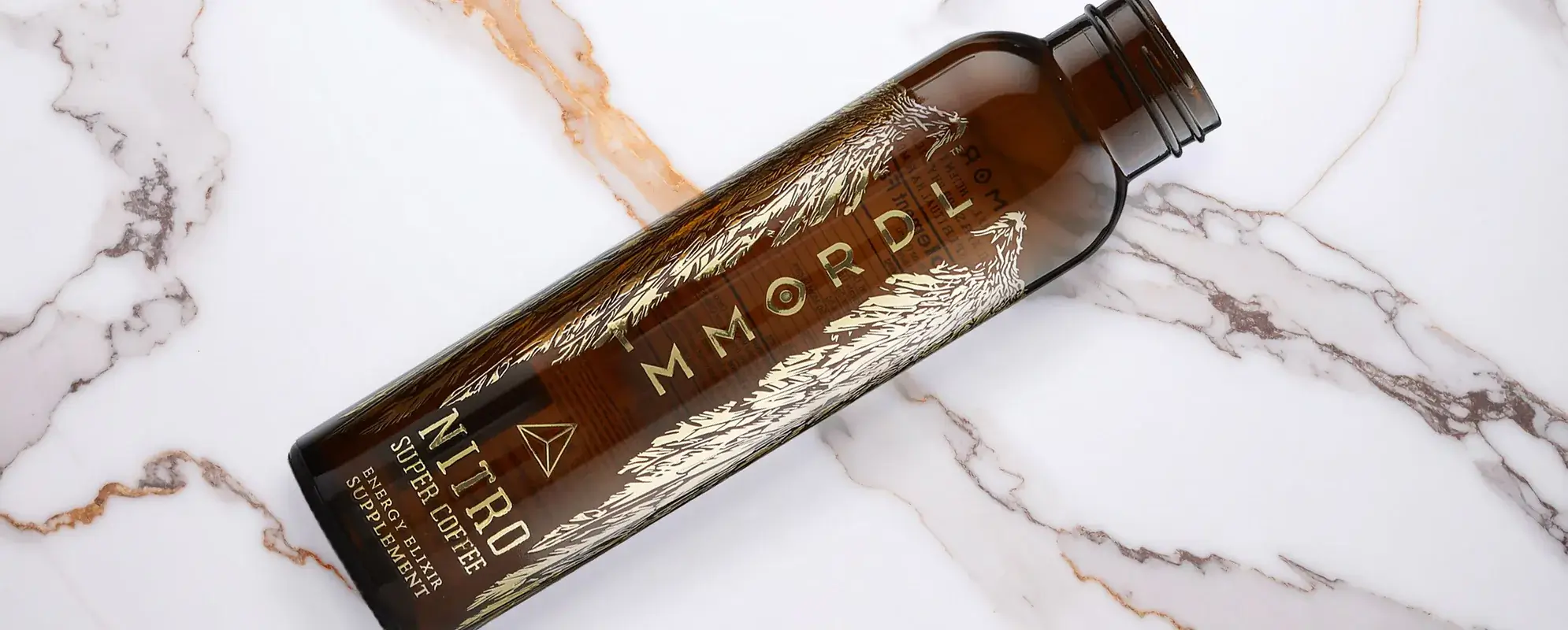
When it's applicable: complex multicolor artwork on shapes that direct printing can't reach evenly, plus limited editions and seasonal SKUs where the artwork changes faster than tooling could keep up. It is the lowest-commitment route in this category.
Limitations: application is more labor-intensive per unit than direct print at scale, and decal edges can be visible if the artwork isn't designed to hide them.
Pairs with: frosted or color-sprayed bases, and hot-stamped accents alongside the decal rather than over it.
To learn more about the advantages, manufacturing process, and product applications, visit our page on Decal.
Water transfer
Water transfer (hydrographics) floats a water-soluble printed film on water and wraps it around a dipped part. Evergreen describes it as using "a water-soluble film to apply complex patterns or graphics, such as wood grain, to irregular shapes—ideal for full-surface decoration with excellent coverage and conformity."
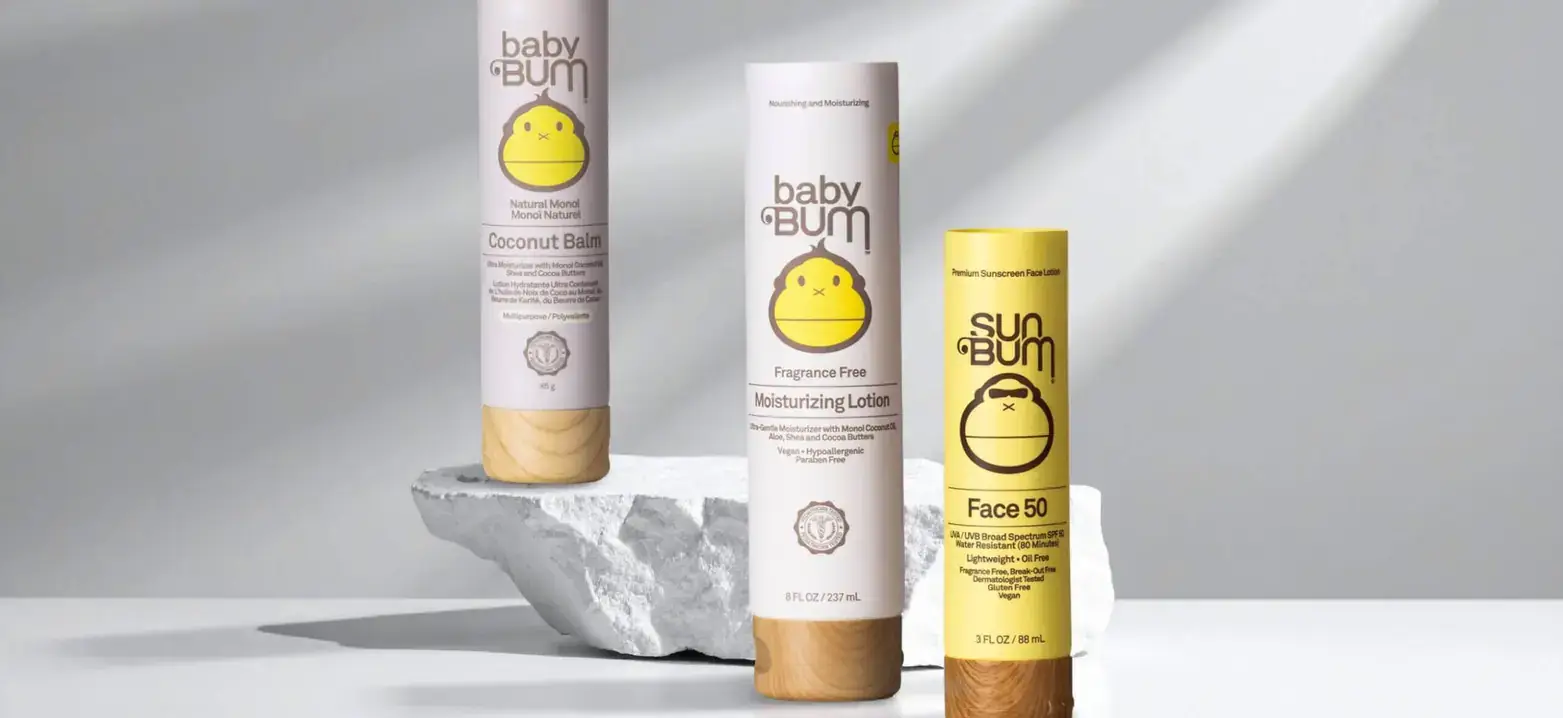
When it's applicable: full 360-degree coverage on three-dimensional plastic parts and tubes, especially continuous patterns — wood grain, stone, camouflage — where a seam or a registration mark would break the illusion.
Limitations: primarily a plastic process; it requires a base coat beneath the film and a clear top coat above it, so the spray line is part of the process rather than an option; and registration is too imprecise for fine type or a logo that must land in an exact spot.
Pairs with: color spray, which supplies both the base and the protective top coat, and a soft-touch topcoat where the finish should be tactile.
To learn more about the advantages, manufacturing process, and product applications, visit our page on Water Transfer.
Hot stamping
Hot stamping presses a heated engraved die through a metallic or pigmented foil to bond it to the surface—"a dry transfer process, eliminating the need for ink and post-print curing," producing "a durable, long-lasting decoration that is resistant to fading, smudging, and moisture." Evergreen notes it's "best suited for designs with 1–3 colors, as each color requires its own unique foil and stamping pass," with foil options including metallic, matte, holographic, and pigment. It works on plastic, metal, and glass.
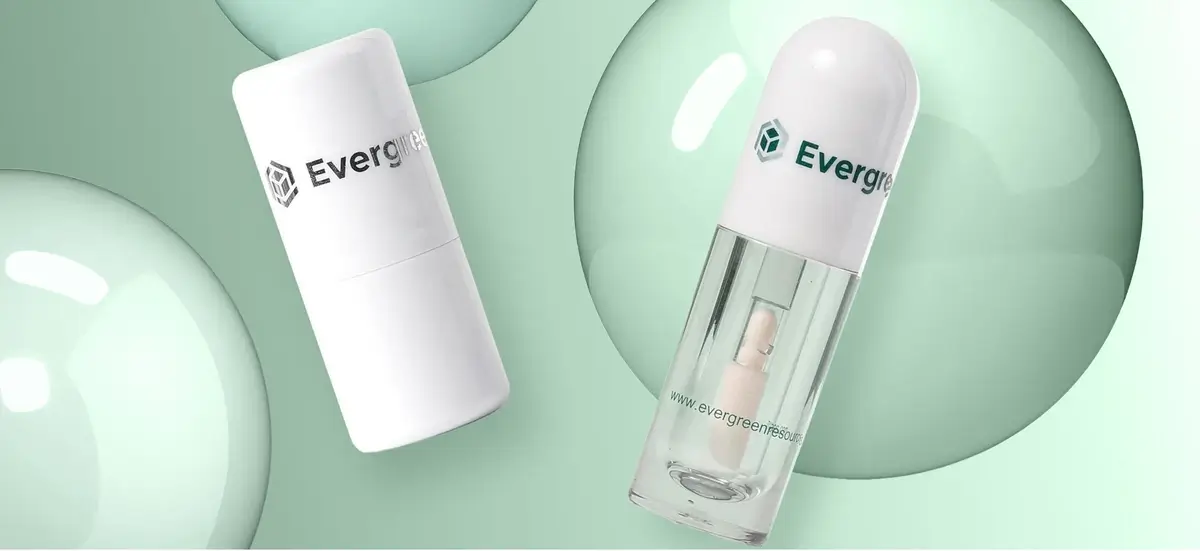
When it's applicable: gold, silver, and rose-gold logos, shoulder rings, and cap accents that signal premium at a modest price point relative to metallization. It is the cheapest credible route to a metallic effect.
Limitations: limited to pre-manufactured foil colors; each color needs its own foil and pass, with registration between them; and fine gradients are not possible.
Pairs with: embossed relief — foil stamped into a raised or recessed logo is the classic prestige build — plus silkscreen for the main color, and matte or frosted surfaces that make the foil read harder.
To learn more about the advantages, manufacturing process, and product applications, visit our page on Hot Stamping.
Embossing & debossing
Embossing (raised) and debossing (recessed) create relief by engraving the design into precision molds so "the molten material conforms to the mold's surface, permanently imprinting logos, text, or decorative patterns." Evergreen highlights four advantages: durability ("permanent branding that won't fade, scratch off, or peel"), cost efficiency ("saving significantly over time after the initial mold investment"), authenticity (harder to counterfeit), and eco-friendliness ("reduces waste by cutting out labels, inks, and extra processes"). It is available on glass, plastic, and metal.
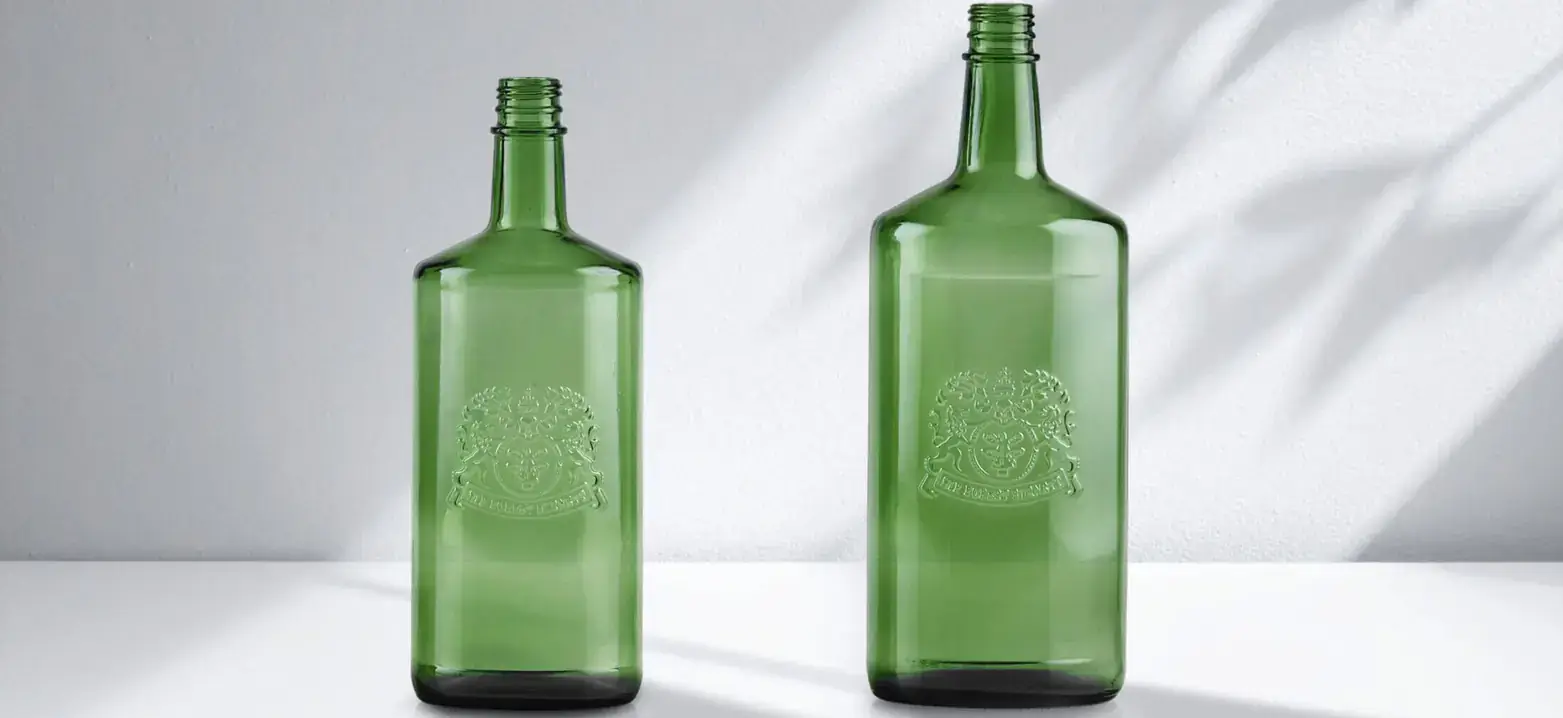
When it's applicable: logos formed directly into the pack where permanence and anti-counterfeiting matter, and volumes are large enough and stable enough to amortize tooling. It is the only method here with no added material at all.
Limitations: requires mold or die investment, and the artwork is fixed once the tool is cut; relief alone also reads as subtle, which is why it is so often paired with a highlight.
Pairs with: hot-stamped foil into the relief, soft touch over the relief, and litho printing on metal registered to a formed shape. See also Custom Tooling.
To learn more about the advantages, manufacturing process, and product applications, visit our page on Emboss & Deboss.
In-mold labeling (IML)
IML integrates a pre-printed label into the part during molding, so molten resin fuses the label into the container wall. The result is "a premium, scratch-proof finish that is resistant to moisture, chemicals, and abrasion" and "will not peel, fade, or delaminate," with "full-color, photo-quality images" and a seamless no-label look. Labels are printed by offset or flexography on resin-compatible film.
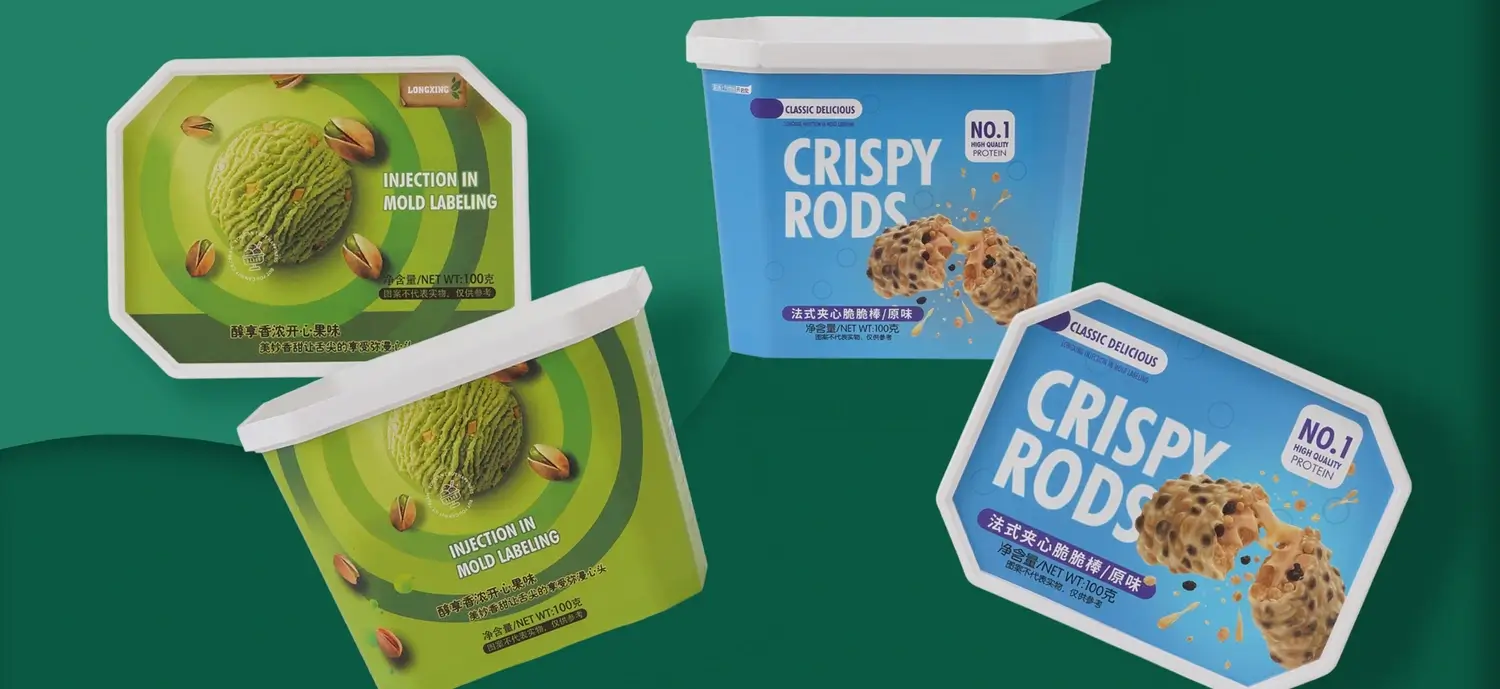
When it's applicable: high-volume rigid plastic — tubs, containers, some bottles — that needs photographic graphics and maximum durability with no secondary labeling step at all. Because the label becomes part of the wall, there is nothing to apply, inspect, or replace downstream.
Limitations: molding-based, so setup is the highest in this guide and it only suits large runs; and every design change requires a new label print run, not just a new plate.
Pairs with: embossing formed into the same mold. It otherwise stands alone, since the point is a single seamless surface.
To learn more about the advantages, manufacturing process, and product applications, visit our page on In-Mold Labeling.
Combining these methods with other techniques
The most memorable packs almost never rely on a single technique. Evergreen explicitly supports multi-technique decoration — “combining techniques on a single package is common, particularly for premium personal care and beauty products” — and coordinates the sequencing so each layer survives the next.
Combining within this category
- Embossing + hot stamp foil. The single most important combination in packaging decoration. Foil stamped into an embossed or debossed relief produces a tactile, light-catching logo that is very hard to counterfeit and reads as expensive from across an aisle — classic for spirits and prestige skincare.
- Embossing + in-mold labeling. Both happen in the mold, so relief and a fused photographic label can be delivered in a single molding operation.
With printing
- Silkscreen + hot stamping. The industry-standard cosmetic build: screen printing carries the main brand colors and regulatory text, a small hot-stamped metallic logo or shoulder ring adds prestige. Keeps MOQ and cost sensible while looking high-end.
- Flexography or offset → in-mold labels. IML labels are printed by one of these before molding. The printing method and the application method are separate decisions, and the label print run is what constrains design changes.
- Litho + embossing on metal. Artwork printed on flat sheet, registered to relief formed during the same operation.
With textures and coatings
- Frosted glass + decal. Etched frosting as a luxurious base with a multicolor decal over it, for artwork too complex to screen print.
- Metallization + hot stamping. Foil over a plated surface picks out a logo in a contrasting metal.
- Soft touch over embossed relief. A raised logo under a velvety coating — felt before it is seen, which is the point.
- Color spray under water transfer. Water transfer requires a base coat and a clear top coat, so the two processes run as one.
The sequencing rule of thumb: build up from the surface — base color or coat first, printed graphics next, tactile and protective coatings and delicate foils last. Evergreen manages this ordering in production and verifies color with X-Rite spectrophotometers plus solvent-resistance and anti-scratch testing.
How to choose: a five-step framework
Step 1 — Start with the packaging material (substrate). Glass and metal take decals, foil, and relief, but not water transfer or IML. Plastic takes everything, and is the only substrate that takes water transfer or in-mold labeling — the latter requiring a rigid molded part. (See product pages for Glass, Plastic, and Metal.)
Step 2 — Pin down how often the artwork will change. This is the decisive question in this category. Artwork that changes seasonally, regionally, or promotionally points to decals, which carry no tooling at all. Artwork that is fixed for years justifies a die or a mold, and rewards it with lower unit cost and far better durability. Getting this backwards is expensive in both directions.
Step 3 — Set the brand tier. Value and utility lines are well served by a decal or a single foil accent. Mid-tier gets decals, water transfer, or a more prominent hot-stamped mark. Premium and prestige is where embossing, foil into relief, and IML earn their tooling — and where they are almost always layered rather than used alone.
Step 4 — Weigh volume, tooling, and risk together. Tooling is committed per SKU and is effectively irreversible once cut, so a portfolio of many products multiplies the exposure. Set that against per-unit cost and the cost of getting it wrong — line rejects, a label that peels in transit, or a recall driven by illegible regulatory text.
Step 5 — Layer in sustainability requirements. This category carries the largest recyclability consequences of the three, in both directions. Let it constrain the shortlist before you finalize.
Sustainability & recyclability considerations
This is the category where decoration most affects whether a package can actually be recycled — and it contains both the best and the worst options available.
- Direct decoration is the best case. Embossing and debossing add no material at all: no label, no ink, no adhesive, no separate film. Evergreen notes that embossing “reduces waste by cutting out labels, inks, and extra processes.” In-mold labels made from a polymer compatible with the container are close behind, because the label reprocesses along with the wall rather than needing separation.
- Applied films add material; formed decoration doesn’t. A decal or a water-transfer film brings its own carrier, ink, and adhesive to the pack, plus a clear top coat over it. None of that is disqualifying, but it is material the container didn’t have before, and it should be specified for compatibility with reprocessing rather than left to the supplier. Embossing and in-mold labeling avoid the question entirely.
- Match materials. Recyclability improves when label, closure, and decoration polymers match the container polymer, and when inks and adhesives are compatible with reprocessing. This is the single most useful instruction to give a supplier early.
- Glass and metal. Per Robert Weisenburger Lipetz of the Glass Manufacturing Industry Council, glass is fully recyclable with an unlimited life and can be remelted repeatedly without losing quality — and the Glass Packaging Institute puts the bin-to-shelf turnaround as low as 30 days. Embossing does not impede that in any way. Metal is likewise infinitely recyclable.
Because sustainability and design objectives differ from one brand to the next, Evergreen guides customers through packaging selection and procurement with objective recommendations — and since we offer every decoration method and material type, that guidance is grounded in what actually serves the pack, not in what we happen to sell.
Get the commitment right the first time
This category rewards decisiveness and punishes hesitation. A die or a mold delivers the most durable, most premium, lowest-unit-cost decoration available — but only if the artwork behind it is settled. A decal delivers near-total flexibility at the cost of unit economics at scale. Almost every expensive mistake here comes from choosing one when the program actually needed the other.
Evergreen integrates decoration into production across glass, plastic, and metal, with dielines for every product category, digital artwork proofs in 3 business days, physical color samples in 7–14 business days, and QC engineers onsite at every run. Explore the full Advanced Decorations and Printing Capabilities, pair it with custom tooling for embossed or bespoke shapes, or Get Started to request samples, an artwork proof, or a decoration consultation.
For the other two decoration routes, see our Printing Methods Guide and our Textures & Coatings Guide.