


This guide provides a practical overview of common metal packaging formats, including tinplate containers, aluminum containers, aerosol packaging, and metal caps and lids. It explains what each format is, its typical sizes and applications, and its main advantages and limitations. The goal is to help customers understand the differences between major metal packaging categories and identify which format may be suitable based on their product, filling process, dispensing needs, and distribution requirements.
Quick Comparison of Metal Packaging Categories
| Category | Common formats | Typical uses | Main characteristics |
|---|---|---|---|
| Tinplate containers | Chemical cans, food cans, pails, tin boxes, and jars | Food, paints, chemicals, oils, and gift products | Strong, rigid, versatile, and widely available |
| Aluminum containers | Bottles, tubes, two-piece cans, and cartridges | Beverages, personal care, pharmaceuticals, and sealants | Lightweight, corrosion-resistant, and available in seamless formats |
| Aerosol packaging | Aluminum aerosol cans, steel aerosol cans, valves, and actuators | Sprays, foams, cleaners, lubricants, and personal care products | Pressurized packaging with controlled dispensing |
| Metal caps and lids | CT caps, lug caps, crown caps, ROPP caps, and easy-open lids | Bottles, jars, food cans, and beverage containers | Provides sealing, resealing, tamper evidence, or easy opening |
Tinplate Containers
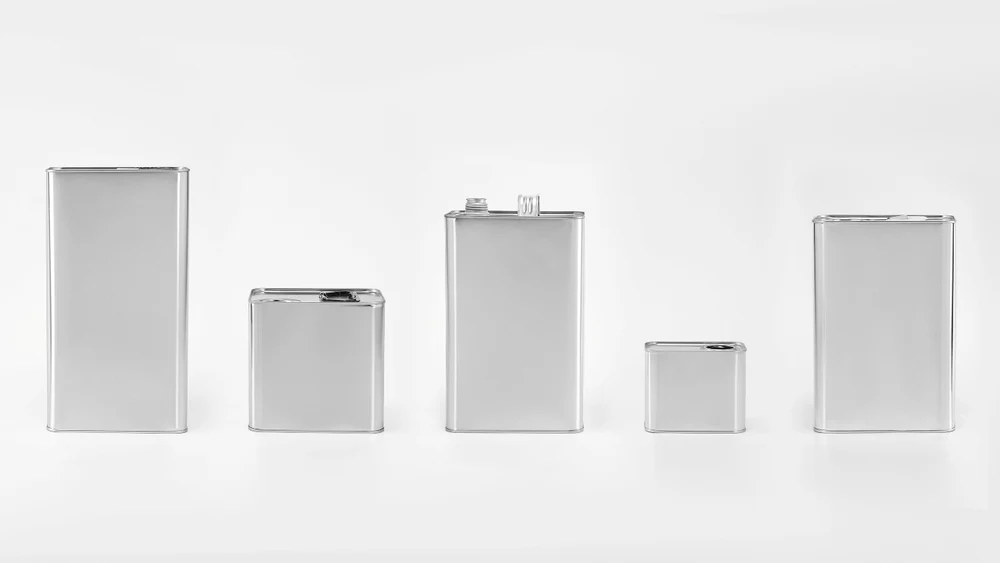
Tinplate containers are made from steel sheet coated with a thin layer of tin. Although they are often called “tin cans,” steel provides most of the container’s structural strength. The tin coating supports corrosion protection, forming, coating application, printing, and manufacturing performance.
This category includes chemical cans and pails, two-piece and three-piece food cans, decorative tin boxes, metal jars, trays, and other rigid steel containers.
Chemical cans and pails are commonly used for paints, coatings, adhesives, lubricants, solvents, fuels, and maintenance products. Food cans are designed for products such as vegetables, sauces, meat, seafood, coffee, powdered products, and pet food. Decorative tin boxes and jars are frequently used for confectionery, tea, cosmetics, candles, gift sets, and promotional products.
Common Sizes
Tinplate containers cover a broad range of capacities. Small decorative tins may hold only a few milliliters, while large steel pails may hold several gallons.
Common chemical can capacities include half-pint, pint, quart, half-gallon, and one gallon. Food cans are commonly specified by diameter and height, while decorative tins are often identified by length, width, height, and shape rather than volume alone.
Actual dimensions depend on the container design, opening, closure system, manufacturing method, and intended application.
Common Applications
- Canned foods and beverages
- Paints and coatings
- Adhesives and sealants
- Oils and lubricants
- Solvents and fuels
- Coffee and powdered products
- Candy and confectionery
- Tea and gift products
- Cosmetics and candles
- Household and industrial chemicals
Advantages and Limitations
Tinplate containers provide strong physical protection and excellent barrier performance. They are available in many shapes, sizes, opening styles, and closure configurations. Depending on the design, they may also be suitable for hot filling, retort processing, vacuum packaging, or regulated product transportation.
The primary limitation is the potential for corrosion when the metal, internal coating, product formulation, and storage conditions are not properly matched. Tinplate containers may also dent during handling or transportation.
Products requiring an airtight or leak-resistant package may need a suitable internal coating, liner, gasket, membrane, closure, or mechanically seamed end. Decorative tins with slip-cover or hinged lids should not automatically be considered airtight or hermetically sealed.
To learn more, visit our product pages for Chemical Cans, Food-Grade Metal Cans, and Metal Jars & tins.
Aluminum Containers
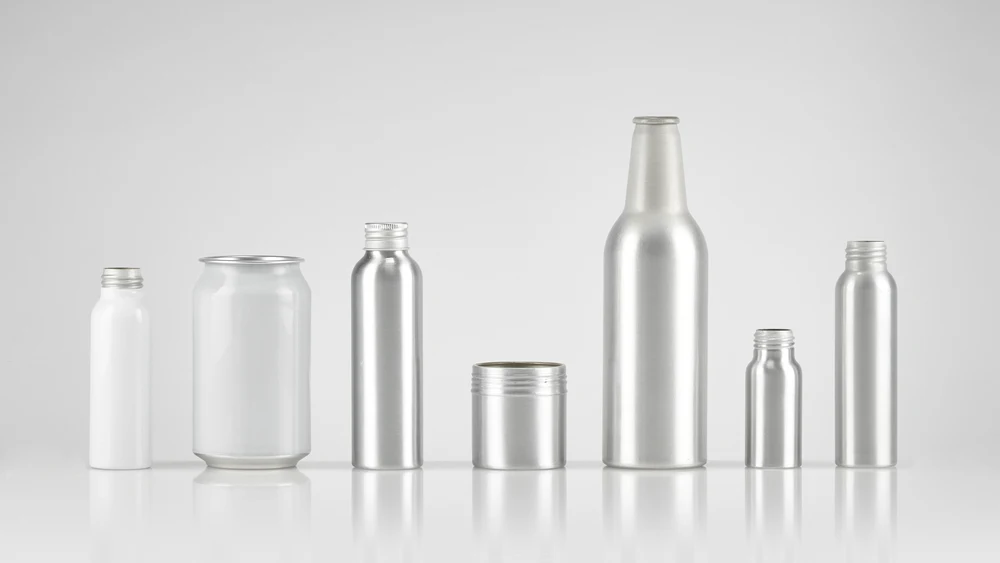
Aluminum containers are lightweight metal packages commonly selected when barrier performance, corrosion resistance, appearance, or reduced packaging weight is important.
This category includes aluminum bottles, collapsible tubes, two-piece cans, jars, and dispensing cartridges. Aluminum bottles are commonly used for beverages, personal care products, oils, and chemicals. Aluminum tubes are suitable for creams, ointments, pastes, adhesives, and gels. Two-piece aluminum cans are widely used for beverages, while aluminum cartridges are used for sealants, caulking materials, and construction adhesives.
Many aluminum containers are manufactured without a welded side seam, producing a smooth body that supports printing, labeling, and decorative finishes.
Common Sizes
Aluminum bottles commonly range from small personal care sizes to larger beverage and chemical containers. Collapsible aluminum tubes are available in small pharmaceutical or cosmetic sizes as well as larger formats for food and industrial products.
Common beverage-can capacities include approximately 250 ml, 330 ml, 355 ml, 473 ml, and 500 ml. Aluminum cartridges are frequently produced in capacities around 250 ml to 300 ml.
Size availability depends on the container diameter, height, opening, manufacturing method, and existing supplier tooling.
Common Applications
- Carbonated and non-carbonated beverages
- Beer, wine, and spirits
- Personal care products
- Pharmaceutical creams and ointments
- Toothpaste and oral care products
- Food pastes and condiments
- Adhesives and sealants
- Lubricants and greases
- Household and industrial chemicals
- Specialty oils
Advantages and Limitations
Aluminum is lightweight, resistant to rust, and capable of providing strong protection against light, oxygen, and moisture. Seamless aluminum containers also provide a clean appearance and a large surface for printing and decoration.
However, aluminum is softer than steel and may dent or deform if it is not handled properly during filling, transportation, or consumer use. The container’s internal coating must be compatible with the product, especially for acidic, alkaline, water-based, or chemically aggressive formulations.
Containers used for carbonated or pressurized products must be specifically designed and tested for the expected internal pressure. The opening and neck finish must also match the selected cap, valve, pump, or other dispensing component.
To learn more, visit our product pages for Aluminum Bottles, Aluminum Tubes, and Cartridges.
Aerosol Packaging
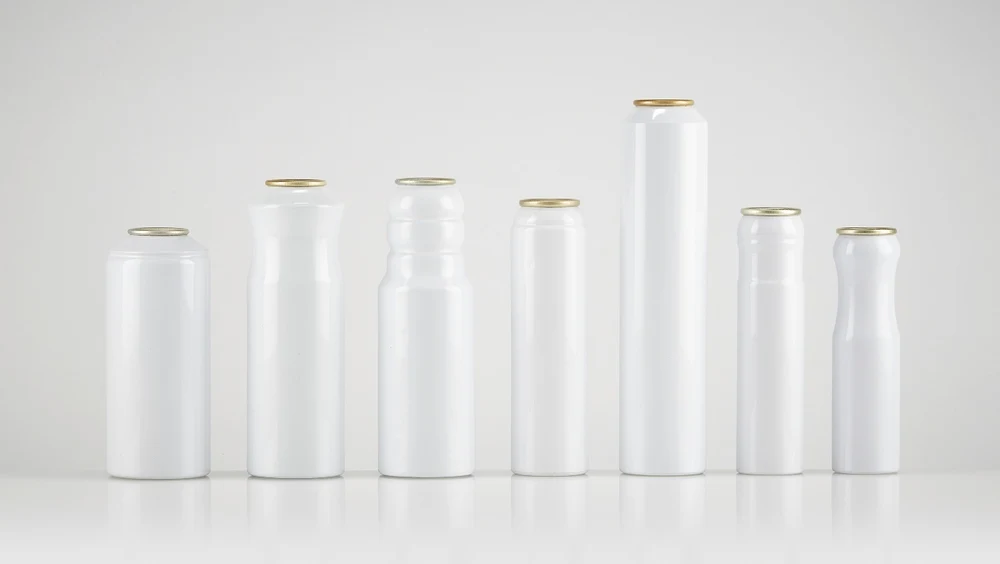
Aerosol packaging is a pressurized dispensing system that releases a product as a spray, mist, stream, foam, or other controlled pattern.
A complete aerosol package normally includes the can, product formulation, propellant or compressed gas, valve, gasket, dip tube, actuator, and optional protective overcap. Some systems use bag-on-valve technology, which separates the product from the propellant inside a flexible internal bag.
Aerosol cans are commonly made from aluminum or tinplate steel. Aluminum aerosol cans are generally seamless and are frequently used for personal care, pharmaceutical, food, and premium consumer products.
Steel aerosol cans are commonly manufactured in necked-in or straight-sided formats. They are widely used for household cleaners, automotive products, paints, lubricants, adhesives, and industrial chemicals.
Common Sizes
Aerosol cans are available in sizes ranging from small personal care or pharmaceutical containers to larger household and industrial formats. Representative capacities may range from approximately 20 ml to more than 800 ml.
Common aerosol-can diameters generally fall between approximately 22 mm and 70 mm. The same diameter may be produced in several heights, allowing different fill volumes while maintaining a similar package width.
The required can size should be selected based on product fill volume, required headspace, propellant system, pressure rating, valve configuration, and applicable transportation requirements.
Common Applications
- Deodorants and body sprays
- Hair sprays and dry shampoos
- Air fresheners
- Household cleaners
- Spray paints and coatings
- Lubricants
- Automotive maintenance products
- Insecticides
- Spray adhesives
- Food sprays and foams
- Pharmaceutical sprays
Advantages and Limitations
Aerosol packaging provides convenient and controlled dispensing while protecting the remaining product from outside contamination during use. The valve and actuator can be designed to produce fine mist, foam, stream, wide spray, narrow spray, or measured output.
Because aerosol packaging operates under pressure, the complete system must be evaluated together. The can, internal lining, formulation, propellant, gasket, valve, actuator, and pressure rating must all be compatible.
Specialized pressure-filling equipment is required, and applicable storage, handling, and transportation requirements must be followed. Improper component selection may result in leakage, corrosion, clogging, pressure loss, poor spray performance, or incomplete product evacuation.
To learn more, visit our product pages for Steel Aerosol Cans and Aluminum Aerosol Cans.
Metal Caps and Lids
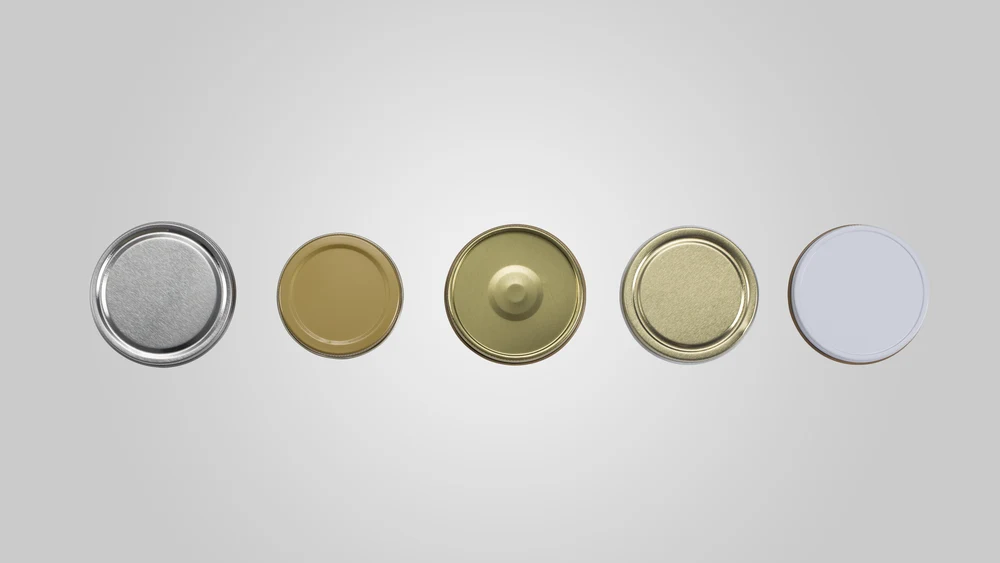
Metal caps and lids are components used to seal bottles, jars, cans, and other containers. Depending on the design, they may provide resealability, tamper evidence, vacuum retention, pressure resistance, product protection, or convenient opening.
Common metal closures include continuous-thread caps, lug caps, crown caps, roll-on pilfer-proof caps, press-on twist-off caps, and specialty closures. Easy-open lids are also included in this category, although they are normally permanently seamed onto the container before the consumer opens the package.
Continuous-thread caps use a full internal thread and can generally be removed and reapplied. Lug caps use several short lugs and typically open with a partial turn. Crown caps are commonly used for beer and carbonated beverage bottles.
Roll-on pilfer-proof, or ROPP, caps are formed around the bottle finish during the capping process and commonly include a tamper-evident band. Easy-open lids use a pull tab and scored panel to allow a can to be opened without a separate tool.
Common Sizes
Metal caps and lids are available in a wide range of diameters. Bottle and jar closures may range from approximately 18 mm to more than 100 mm.
Common lug-cap diameters include approximately 38, 43, 53, 63, 70, 82, and 100 mm. Crown caps are commonly produced in a nominal 26 mm format, while many ROPP closures fall between approximately 18 mm and 38 mm.
Easy-open lids are specified according to the matching can diameter, end profile, and seaming requirements. Closure diameter alone does not confirm compatibility. The thread profile, lug pattern, finish height, liner, skirt depth, sealing surface, and application method must also match the container.
Common Applications
- Glass food jars
- Sauce and condiment bottles
- Beer and carbonated beverages
- Wine and spirits
- Pharmaceutical containers
- Edible oils and syrups
- Chemical bottles and cans
- Beverage cans
- Food and pet food cans
- Cosmetic and personal care containers
Advantages and Limitations
Metal caps can provide reliable sealing, strong barrier performance, resealability, tamper evidence, and compatibility with hot-fill, vacuum, or pressure applications. Different liners and sealing compounds may be selected based on the product formulation and processing method.
However, the closure must be matched precisely to the container finish and application equipment. Incorrect capping torque, crimping, roll-on settings, or seaming conditions may cause leakage, difficult opening, poor vacuum retention, spinning caps, or closure damage.
The liner or sealing compound must also be compatible with the product and filling temperature. Easy-open lids require careful control of the score, tab, coating, sealing compound, and double seam to ensure both package integrity and acceptable opening performance.
To learn more, visit our product page for Metal Caps & Closures.
How to Select the Right Metal Packaging
Metal packaging can be divided into four major categories, each designed for different products and filling requirements.
Tinplate containers provide strong and versatile packaging for foods, paints, chemicals, oils, and decorative products. Aluminum containers offer lightweight solutions for beverages, personal care products, pharmaceuticals, adhesives, and sealants. Aerosol packaging supports pressurized and controlled dispensing, while metal caps and lids provide sealing, resealability, tamper evidence, vacuum retention, and easy opening.
Each category has its own advantages and limitations. Final package selection should be based on product compatibility, required capacity, filling conditions, dispensing method, closure performance, transportation demands, regulatory requirements, and filling-line capability.
Evergreen Resources supports customers in evaluating metal packaging options based on their product, application, processing, and supply requirements. By reviewing the complete package—including the container, coating, closure, filling process, and distribution environment—Evergreen can help customers identify suitable packaging formats and reduce potential compatibility, performance, and filling-line issues during development.
FAQ
What are the main types of metal packaging?
The main metal packaging categories include tinplate containers, aluminum containers, aerosol packaging, and metal caps and lids. Each category serves different applications and filling requirements. Evergreen helps customers compare these formats based on product compatibility, capacity, dispensing method, processing conditions, and transportation needs.
What is the difference between tinplate and aluminum packaging?
Tinplate packaging is made from steel sheet coated with a thin layer of tin, providing strong structural protection and versatility. Aluminum packaging is lighter, resistant to rust, and often available in seamless formats. Tinplate is widely used for food, paint, chemicals, and decorative tins, while aluminum is common for beverages, personal care products, tubes, and sealant cartridges.
What products are commonly packaged in tinplate containers?
Tinplate containers are commonly used for canned foods, paints, coatings, adhesives, oils, lubricants, solvents, fuels, coffee, confectionery, cosmetics, and household chemicals. Available formats include chemical cans, food cans, pails, trays, metal jars, and decorative tins. Evergreen can help identify an appropriate container and coating based on the product and filling process.
How do you select the right metal container size?
Metal container size should be selected based on the required fill volume, product density, headspace, container dimensions, opening style, closure system, and filling-line requirements. For aerosol packaging, propellant volume and pressure must also be considered. Evergreen recommends reviewing actual dimensional drawings and samples rather than selecting a package by stated volume alone.
What components are included in an aerosol packaging system?
A complete aerosol package normally includes the can, product formulation, propellant or compressed gas, valve, gasket, dip tube, actuator, and optional overcap. Some packages use bag-on-valve technology to separate the product from the propellant. All components must be evaluated together to prevent leakage, corrosion, clogging, pressure loss, or poor spray performance.
Are metal containers airtight and leak-resistant?
Some metal containers can provide airtight, hermetic, or leak-resistant performance, but this depends on the complete package design. Internal coatings, liners, gaskets, membranes, closures, and mechanically seamed ends may be required. Decorative tins with hinged or slip-cover lids should not automatically be considered airtight. Evergreen can review the sealing requirements for the intended application.
How do you know whether a metal cap fits a bottle or jar?
Closure diameter alone does not confirm compatibility. The container’s thread profile, lug pattern, finish height, sealing surface, and neck dimensions must match the cap’s liner, skirt depth, and application method. Samples should also be tested on the intended capping equipment to confirm sealing, opening torque, vacuum retention, and application performance.
Why are internal coatings important for metal packaging?
Internal coatings help separate the product from the metal and reduce the risk of corrosion, discoloration, flavor changes, or package failure. The coating must be compatible with the formulation, filling temperature, processing method, and storage conditions. Evergreen evaluates the container, coating, closure, and product requirements together when recommending metal packaging options.