

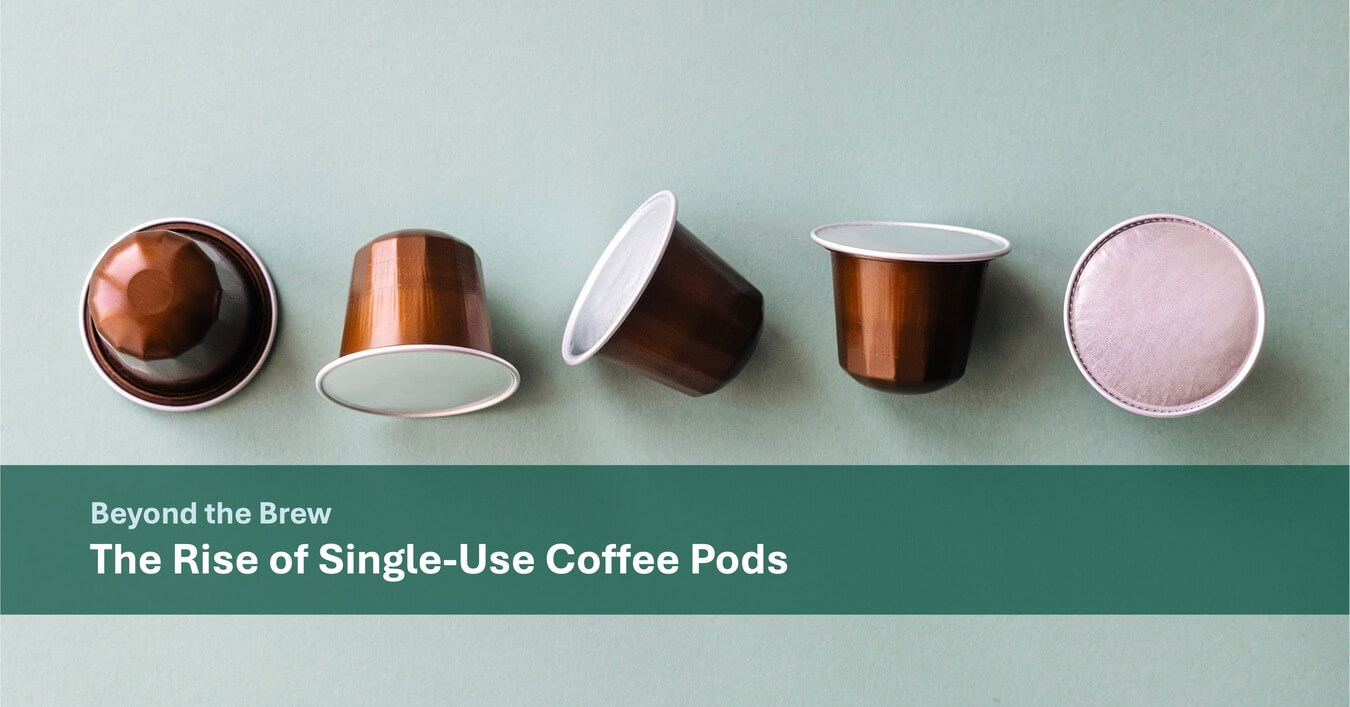
Single-serve coffee has fundamentally reshaped how consumers experience their daily brew — making convenience, speed, and portion control central to modern routines. What began as a niche format has grown to capture more than 40% of the U.S. retail coffee market, fueled in part by the rise of plastic K-Cups and similar pod systems. As home brewing and on-the-go consumption continue to expand, consumers increasingly expect consistent, high-quality coffee with minimal effort. For brands, this creates both opportunity and operational pressure — the chance to reach new audiences through private-label or specialty offerings, and the need for packaging that delivers on performance, shelf life, and production efficiency. In response, many food and beverage companies are exploring custom single-serve solutions that balance consumer appeal with manufacturing precision.
What Makes a Great Single-Use Coffee Pod?
A well-engineered single-use coffee pod goes beyond convenience — it supports brewing consistency, protects product quality, and integrates reliably with brewing systems like Keurig. In the case of plastic K-Cups, performance is often defined by three core attributes:
- Compatibility with Keurig machines: Pods must be precisely designed to align with Keurig brewing systems. That means exact control over dimensions, rim profile, and material stiffness to ensure proper puncturing and a secure seal. Inconsistent sizing can lead to leaks, under-extraction, or mechanical issues.
- Barrier protection: Coffee is highly sensitive to oxygen and moisture. While basic polypropylene (100% PP) provides limited protection, enhanced multi-layer formats — such as 5-layer or 7-layer PP/EVOH — offer stronger oxygen barriers, helping preserve freshness and extend shelf life.
- Consistent brewing performance: Factors like filter placement, material permeability, and how the pod responds to puncture directly impact water flow and extraction. A well-designed pod delivers consistent taste and strength from one cup to the next — critical for maintaining brand trust.
At Evergreen, every pod format is built with these priorities in mind. Standard designs follow Keurig-compatible specifications, while advanced barrier formats featuring 5-layer or 7-layer EVOH structures are available for extended shelf-life needs. Controlled filter placement and validated flow performance further ensure dependable brewing across every cup.
Understanding Customization Options for Single-Use Coffee Pods
Single-use coffee pods are available in both filtered and non-filtered formats, depending on the product type and how it’s brewed. Filtered formats are typically used for ground coffee, where an internal filter supports proper extraction and helps control flow rate. Non-filtered formats are better suited for powders, liquids, or other applications that do not require a filtration layer. While structural customization is limited—particularly for plastic K-Cups, which must remain compatible with Keurig brewers—brands still have flexibility in choosing between standard formats based on product requirements, filling methods, and shelf-life goals:
Filtered Coffee Pods
Filtered pods are commonly used for ground coffee, where internal filtration is necessary to achieve proper extraction and maintain a clean brew. These formats typically use a nonwoven polypropylene filter, which is durable, heat-stable, and food safe. Water flows through the grounds and filter during brewing, retaining sediment while supporting consistent flow:
- Filter configuration: Bottom-only filter (standard in most commercial applications)
- Gram weight: Approximately 2.8g for pods designed to fit Keurig systems; this is Evergreen’s standard specification, with slight adjustments based on pod geometry and filter material.
Non-Filtered Coffee Pods
Non-filtered pods are designed for products that do not require internal filtration — such as liquids, powders, or other soluble ingredients. Instead of a filter, these formats rely on a reinforced plastic base to support the contents during brewing and prevent leakage under pressure:
- No filter layer: The internal cavity is unlined; structure is reinforced through thicker base design
- Gram weight: Typically around 2.3g for pods used in non-filtered applications. Evergreen supplies this as part of its non-filtered pod offering, with weight depending on material and structural design.
Both filtered and non-filtered pod formats serve distinct product and brewing functions. While system compatibility limits structural flexibility — especially for plastic K-Cups — decisions around filter inclusion, material weight, and barrier configuration still offer meaningful opportunities to align packaging with product and performance goals. Evergreen supports this process by providing standardized, validated pod formats and advising on the best fit for different product types and operational requirements.
Purchasing Coffee Pods and Filters Separately
For some operations, it may be more efficient to purchase non-filtered plastic coffee pods and filters (in roll form) separately, applying the filter in-line during the filling process. This approach can help optimize freight and reduce shipping costs, particularly for high-volume production or distributed manufacturing setups:
- Pod Material options: Available in standard polypropylene (PP) or multi-layer PP/EVOH for added oxygen barrier performance
- Filter options: Filters can be supplied in roll form using 100% PET, PP/PET, or paper substrates. Width and length are fully customizable, with available weight options including 18g, 30g, 38g, 48g, and 50g per m².
- Lidding films: Available as plain or printed and can be shipped separately. Printed films can include branding, traceability elements, or regulatory information depending on market needs.
In addition, lidding films are available as plain or printed and can be shipped separately. Printed films allow for product info and brand identity.
Standardized with Limited Customization
Due to the precise mechanical interaction required between Keurig brewing systems and the pod, most structural attributes — including diameter, depth, and rim profile — must remain fixed to ensure proper functionality, as these specifications are tightly controlled to align with the system’s puncture points and brewing mechanics; as a result, structural customization is inherently limited, and adjustments typically focus on non-structural elements that preserve compatibility:
- Cup dimensions: Must align with Keurig-standard size and shape (diameter, depth, rim)
- Filter pore size: Typically standardized for brewing flow rate; only minor variation possible
- Brew puncture points: Determined by Keurig design — not adjustable at the manufacturing level
- Custom molds: Evergreen can support custom mold development when alternate formats are required, though this is less common
While single-serve pods are not “fully customizable” in the way that glass or rigid containers might be due to the standardized nature of the product, there is still meaningful flexibility. Customers can adjust material composition, barrier protection, lidding film design, and filter inclusion to meet product-specific requirements — allowing the format to serve a range of applications beyond coffee. Evergreen supports these adjustments within the constraints of Keurig system compatibility. The goal is to align functional packaging choices with the product’s technical needs, whether that involves optimizing shelf life, handling characteristics, or brewing behavior.
Manufacturing Process
The production method used to manufacture single-use coffee pods — including plastic K-Cups and aluminum coffee pods — plays a significant role in determining unit cost, barrier performance, dimensional precision, and scalability. Each format is produced using a different process, with trade-offs in speed, quality control, and material behavior. Understanding these methods helps brands align packaging choices with product type, operational capacity, and shelf-life requirements.
Thermoforming
Thermoforming is a high-speed process in which a heated plastic sheet is shaped over a mold and trimmed into form — a common choice for producing K-Cups at scale:
- High output: Supports daily production rates of 1.5M–2M units, making it ideal for large-scale runs.
- Cost efficiency: Lower material use and tooling costs result in reduced unit pricing for high-volume applications.
- Flexibility: Faster mold changeovers allow for more agility when producing multiple SKUs or seasonal variations.
- Barrier performance: Typically uses thinner plastic and fewer material layers, making it suitable for products with moderate shelf-life requirements (e.g. standard ground coffee).
- Best suited for: Brands prioritizing speed, scale, and cost-effectiveness over ultra-precise detail or advanced multilayer protection.
Injection Molding
Plastic resin is injected into a rigid mold under high pressure, allowing the material to form with precise dimensional control and uniform wall thickness:
- Lower output: Typical production ranges from 100K–150K units per day, significantly slower than thermoforming but offering tighter tolerances.
- High precision: Delivers superior resin distribution, making it ideal for applications that require consistent cup thickness, clean geometry, and a tight seal with lidding films.
- Durability and strength: Supports use of multi-layer or barrier-enhanced materials that can better withstand heat, pressure, and oxygen exposure — especially important for extended shelf-life products.
- Higher cost: Tooling and unit costs are typically higher due to more complex molds and slower cycle times.
- Best suited for: Premium or specialty coffee products where barrier performance, visual uniformity, and structural consistency are prioritized over maximum production volume.
Deep Drawing Process
Aluminum coffee pods — commonly used in systems compatible with Nespresso — are manufactured through a process known as deep drawing, which shapes flat aluminum disks into durable, sealed pod structures. This method supports both high barrier performance and a premium aesthetic, making it a preferred option for high-end coffee applications:
- Process overview: A flat sheet of aluminum is mechanically stamped into a die and then drawn into a cylindrical shape under controlled pressure. This allows for tight dimensional tolerances and a structurally rigid final form.
- Barrier advantage: Aluminum provides a natural barrier to oxygen, moisture, and light, making it ideal for preserving the flavor and aroma of freshly ground coffee — particularly for products with extended shelf-life or delicate sensory profiles.
- Recyclability: As a mono-material format, aluminum pods are fully recyclable and increasingly favored in regions where sustainability and circularity are consumer priorities.
- Production scale: Compared to plastic pod processes, deep drawing is slower and more capital intensive, requiring dedicated equipment and tooling. However, it offers consistent results at commercial scale once established.
- Best suited for: Premium single-serve coffee applications where flavor integrity, visual quality, sustainability, and brand differentiation are critical.
Each manufacturing process comes with trade-offs between speed, cost, precision, and sustainability positioning. Choosing the right format — whether thermoformed plastic pods, injection-molded plastic K-Cups, or aluminum coffee pods produced through deep drawing — depends on the specific goals of the product: mass-market scale, premium quality, or alignment with environmental priorities. Evergreen supports plastic pod manufacturing across both thermoforming and injection molding processes and can provide guidance on material and format selection based on your product requirements, target market, and production strategy. For a detailed overview, download our technical sheet on K-Cups here.
Personalization for Private Labels
Single-use coffee pods follow a standardized structure to ensure brewing compatibility, particularly with systems like Keurig. Within those constraints, there’s still meaningful room for product-level differentiation. For private-label and specialty roasters, pods offer a practical and scalable format — enabling high-quality, single-serve offerings without the investment required for fully custom tooling. Adjustments to material selection, barrier properties, and lidding film design allow brands to fine-tune both performance and shelf presence while maintaining production efficiency.
- Suitable for private-label and specialty roasters entering or scaling in the single-serve space
- Supports premium positioning through high-barrier materials, film finishes, and label customization
- Customizable variables include lidding design, barrier protection, and pod composition
- Structural dimensions are fixed to meet Keurig-compatible specifications, including diameter, depth, and rim profile.
Evergreen offers pod formats engineered to meet the technical and operational needs of coffee producers. While structural specifications must remain compatible with Keurig systems, brands still have flexibility to make targeted adjustments — such as selecting specific barrier layers, customizing lidding films, or determining whether to include a filter. These options allow alignment with filling line parameters, roast profiles, grind consistency, and shelf-life targets. Evergreen collaborates with coffee brands to evaluate the ideal combination of these variables, ensuring product consistency while delivering a format that’s efficient to manufacture and optimized for retail performance.
Selecting the Right Coffee Pod Supplier
Choosing a coffee pod supplier is not just a matter of sourcing components — it’s about partnering with a manufacturer that understands the technical, operational, and regulatory requirements specific to single-serve formats. Because compatible systems have tight tolerances and specific performance demands, the capabilities of the supplier directly influence production reliability, food safety compliance, and overall product consistency:
- Strong technical expertise and a reliable understanding of Keurig system constraints
- Emphasis on consistent, documented quality control at every stage of production
- A trusted partner for food and beverage brands navigating scale, compliance, and shelf life
Evergreen meets these criteria by providing single-service coffee pods that are thoroughly tested — including FDA-compliance testing — and supported by established technical and quality systems. With a focus on machine compatibility, manufacturing consistency, and barrier performance, Evergreen enables brands to meet production demands while maintaining a high standard of product reliability and consumer experience.
Your Brand, Brewed Your Way
As demand for single-serve coffee continues to grow, k-cups and aluminum espresso pods have emerged as a practical format for brands balancing speed, convenience, and product quality. While the structure is standardized to ensure compatibility with Keurig and Nespresso systems, there’s still meaningful room to tailor materials, barrier layers, and lidding films to suit different product profiles and manufacturing setups. Choosing a supplier that understands both the technical requirements and production realities of coffee packaging can make a measurable difference in consistency, shelf life, and fill-line performance. If you’re exploring single-serve packaging for your coffee program, you can learn more or get in touch through our Get Started Page.