

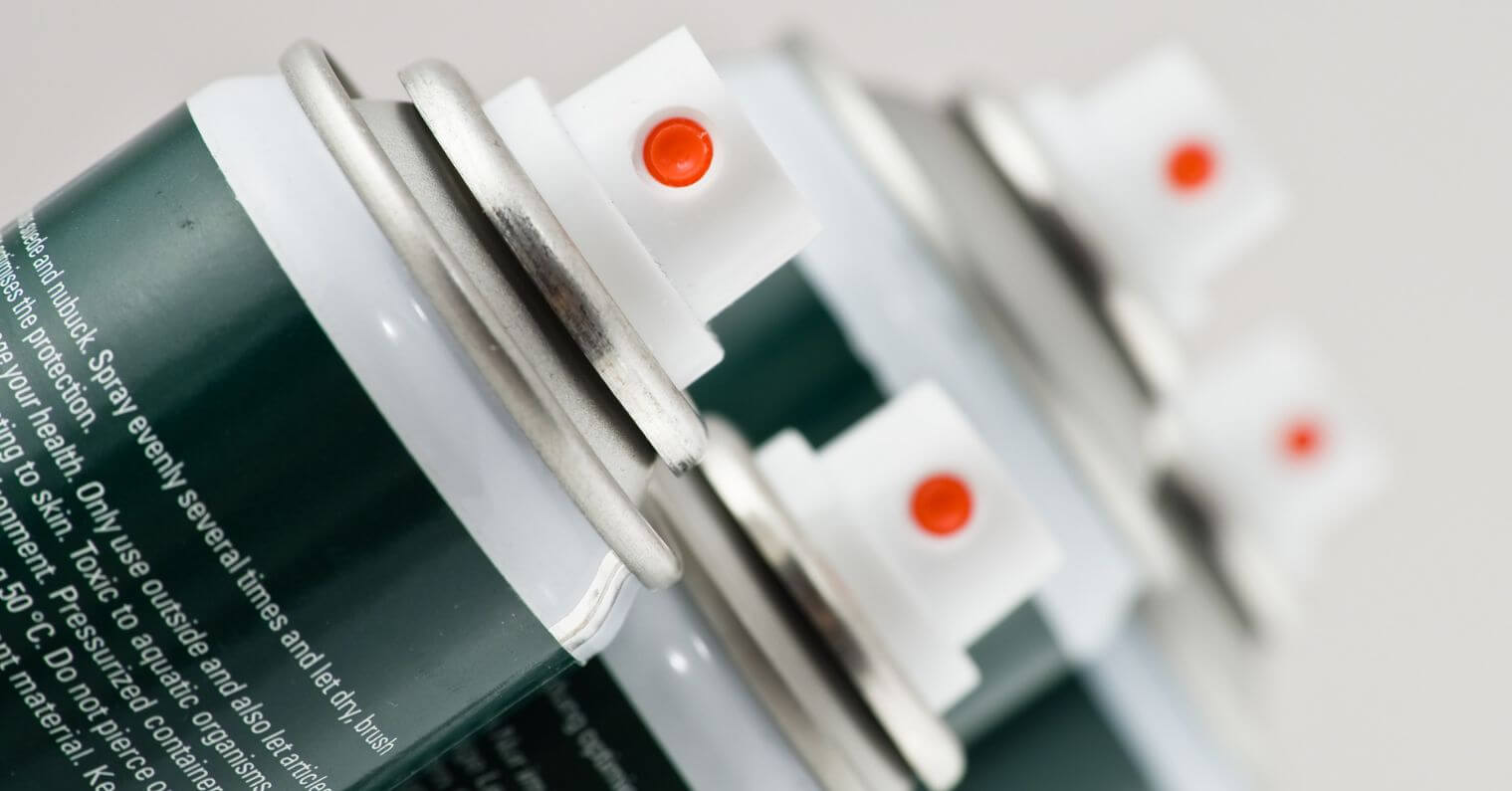
Manufacturing high-quality aerosol cans is a carefully managed process, where every stage, from selecting materials to quality control, ensures the final product meets the rigorous standards of the industry. This guide offers an inside look at each phase of production, highlighting technical details that go into every can.
Material Selection
The first step in aerosol can production is determining the appropriate material, which largely depends on the intended use.
Aluminum: Aluminum is lightweight and corrosion-resistant, making it ideal for personal care products, pharmaceuticals, and food items. Its durability and barrier properties help prevent contamination, which is essential for sensitive or high-value formulas. Products like deodorants, hair sprays, and medical sprays are commonly packaged in aluminum cans due to their high safety standards. Learn more about Evergreen’s Aluminum aerosol cans
Steel: Steel aerosol cans, also known as tinplate aerosol cans, are a cost-effective, highly durable option, suitable for chemical products like lubricants, paints, and cleaning products. Steel cans are commonly used in automotive, household, and industrial sectors, where robustness is essential. They can be lined or unlined based on the formula’s needs, adding flexibility and efficiency for products that do not react with tin. Learn more about Evergreen’s steel aerosol cans.

Tin Aerosol Cans

Aluminum Aerosol Cans
Specification Requirements
Confirming specifications is a crucial step in ensuring that every aspect of the aerosol can—from its dimensions to its safety features—meets both industry standards and brand requirements. At Evergreen Resources, we work with customers to determine specifications that best fit the intended product and usage environment, ensuring that each can delivers optimal performance and durability.
Size:The size of steel cans is indicated by diameter x height (e.g., 202×314, 211×713). The diameter of the can, designated by a code like “202” (which translates to 2 2/16 inches, or 52 mm), impacts both the product’s capacity and appearance. A wider diameter may be more suited to larger-volume products, while a smaller diameter might be better for compact or travel-size items. The height of the can is indicated in codes like “314” (which represents 314/100 inches, or 80 mm). Height selection is critical to fitting the appropriate amount of product while maintaining balance and ease of handling. Taller cans, for example, are often favored for products requiring larger doses, such as industrial lubricants or cleaning sprays.
Shape: The shape describes the shoulder of the aerosol can, which affects labeling and cap fitting. In steel aerosol cans, necking is the process that determines whether the can has a necked-in (NI) or straight-sided (SS) design. In aluminum aerosol, the available shoulder shapes are more varied, from round (most standard) to mushroom to ridge.
Pressure Rating: The Department of Transportation (DOT) sets pressure ratings for aerosol cans to ensure safe storage and handling. Aerosol cans are classified under 3 ratings: 2N, 2P, or 2Q (or EU I, II, III for European markets).
- 2N: The lowest pressure rating, suitable for low-pressure formulations.
- 2P: A mid-range rating for standard pressure applications.
- 2Q: The highest rating, typically used for high-pressure applications or highly volatile contents. Cans with a 2Q rating are designed to withstand higher pressure, making them ideal for certain industrial or automotive applications that require added safety.
Printing Options: When it comes to the can’s surface, customers can choose between Bright/Plain, or Printed/Litho, which influence both branding and usability:
- Bright/Plain: A plain, non-printed surface that’s cost-effective and offers the flexibility for different labels to be applied at the time of filling.
- Printed/Litho: A customized printed finish that can include branding, instructions, and design elements.
Lining Options: Aerosol cans require lining to prevent reactions between the can material and the product inside, ensuring longevity and safety:
- Epoxy Phenolic lining: Commonly used for alkaline products, detergents, fatty acids, food products, and latex paints due to its excellent resistance to alkaline substances.
- Epoxy Amino lining: Often chosen for products that require good adhesion and chemical resistance, such as certain personal care items and household cleaners.
- PAM (polyamide-imide) lining: Commonly used in aluminum aerosol cans for products that require high chemical resistance and protection against corrosion, such as insecticides.
- Unlined cans: Typically used for non-corrosive, non-reactive products that do not interact with tin and do not require additional protection from the metal surface.
Example Specifications: To illustrate, here are typical specifications for both tinplate and aluminum cans:
- 202×314 NI 2P Bright Lined: Tin aerosol can with 202 diameter, 314 height, necked-in shape, 2P pressure, no printing (bright), lined with internal varnish.
- 35mmx95mm Round 2Q Printed Unlined: Aluminum aerosol can with 35mm diameter, 95mm height, round shoulder, 2Q pressure, custom printing, and no internal lining.
Artwork Proofing
If you require printed aerosol cans, then artwork proofing is a critical step in ensuring the printing is done perfectly on every can. Evergreen Resources collaborates closely with customers to ensure every design detail is perfect before moving into full production. Here’s how we manage this process.
Digital Artwork Proofing: After receiving the customer’s digital artwork file, our QA Lab conducts an initial review to check for any potential issues, including content, colors, and printing positions. If any adjustments or confirmations are needed, we communicate them with the customer to resolve them upfront. The final digital proof is sent back to the customer for approval and signature. This step takes 2-3 business days.
Color Range Boards: After receiving the digital artwork approval, we produce physical color range boards indicating the approved color limits to be sent for review and approval. The light limit indicates the lightest allowable tolerance limit, while the dark limit represents the darkest allowable tolerance limit. Production will be based on the approved standard, with acceptable variance not surpassing the light and dark limits.
Pre-Production Samples We produce pre-production samples for final approval prior to mass production. For urgent orders, with customer permission, we may proceed directly to full production based on the approved color range boards or samples. In such cases, PPS samples are sent with the initial batch for final customer confirmation.

Steel Can Printing

Aluminum Can Printing
Stability Testing
Stability testing ensures that there are no adverse chemical reactions between the product formulation and the aerosol packaging. Incompatible materials can lead to corrosion or degradation of the packaging, and such chemical reactions may result in can leakage.
It is the responsibility of the customer and filler to verify the compatibility between the product formulation and the packaging through stability testing. The exact stability testing protocols differ by customer, but a general reference is provided below:
- 10 to 30 cans are filled with the customer’s formula. For extra-corrosive formulas, customers may request up to 90 cans to ensure comprehensive testing.
- Cans are placed in a high-temperature oven set to a specified temperature to simulate long-term storage.
- At intervals of 30, 60, and 90 days, cans are tested by removing one-third of the cans on each testing date, emptying the content, and cutting each can open to check for corrosion and weight loss.
While some customers prefer expediting the process and approving stability with the first 30-day results, most require the complete 90-day evaluation to ensure safety. Stability testing may also be conducted at ambient temperatures, depending on storage conditions. This process ensures the compatibility and safety of each formula with the selected can material.
QA Technical Approvals
Technical approvals are vital in confirming that every production detail, including the approved specifications, artwork, lining, and packing method. As a last step prior to production, Evergreen Resources works closely with customers to sign off on all approved specifications, ensuring the final product meets the necessary standards for its intended use. This step ensures consistent quality and performance, supporting our commitment to delivering durable, compliant aerosol cans.
Production Quality Control
Our experienced quality engineers are onsite for every production run. All Evergreen QC inspectors undergo rigorous training and follow standardized checklists established by our quality engineers. A detailed inspection report is submitted for every production lot.
Evergreen Resources utilizes advanced quality control points, including pressure testing, leak detection, and weight verification to confirm that each can is produced exactly per the approved specifications. To ensure full traceability, All Evergreen aerosol cans are printed with an invisible UV code that indicates the production facility, date, time, and shift in which the can was produced.
Our production inspection protocol covers every stage of manufacturing, including:
- Material inspection: Tinplate size, hardness, appearance.
- Printing & coating: Color, artwork content, printing barcode, appearance, adhesion, paint film hardness, impact resistance, solvent resistance, scratch resistance.
- Completed Can: Diameter, height, gram weight, printing orientation, leak test, inner pressure test, inverted printing check, invisible code, appearance.
- Packing: Configuration, material, pallet tag barcoding, appearance.
Our rigorous quality control procedures can detect any imperfections that could affect the can’s function or appearance. By the time a can leaves our facility, it has passed multiple checkpoints, ensuring it’s ready for filling, shipping, and use. To learn more about our commitment to quality, see QC & QA Approach.
Conclusion: Choosing Quality and Reliability in Aerosol Manufacturing
Evergreen’s aerosol can manufacturing process exemplifies our commitment to excellence at every stage. From efficient artwork proofing to comprehensive quality control, we ensure each can meets the most exacting standards. Our unparalleled expertise, superior quality, and industry leading production capacity make us the ideal partner for businesses seeking to bring their aerosol products to market with confidence. Choose Evergreen Resources for aerosol packaging solutions that your brand can depend on.