

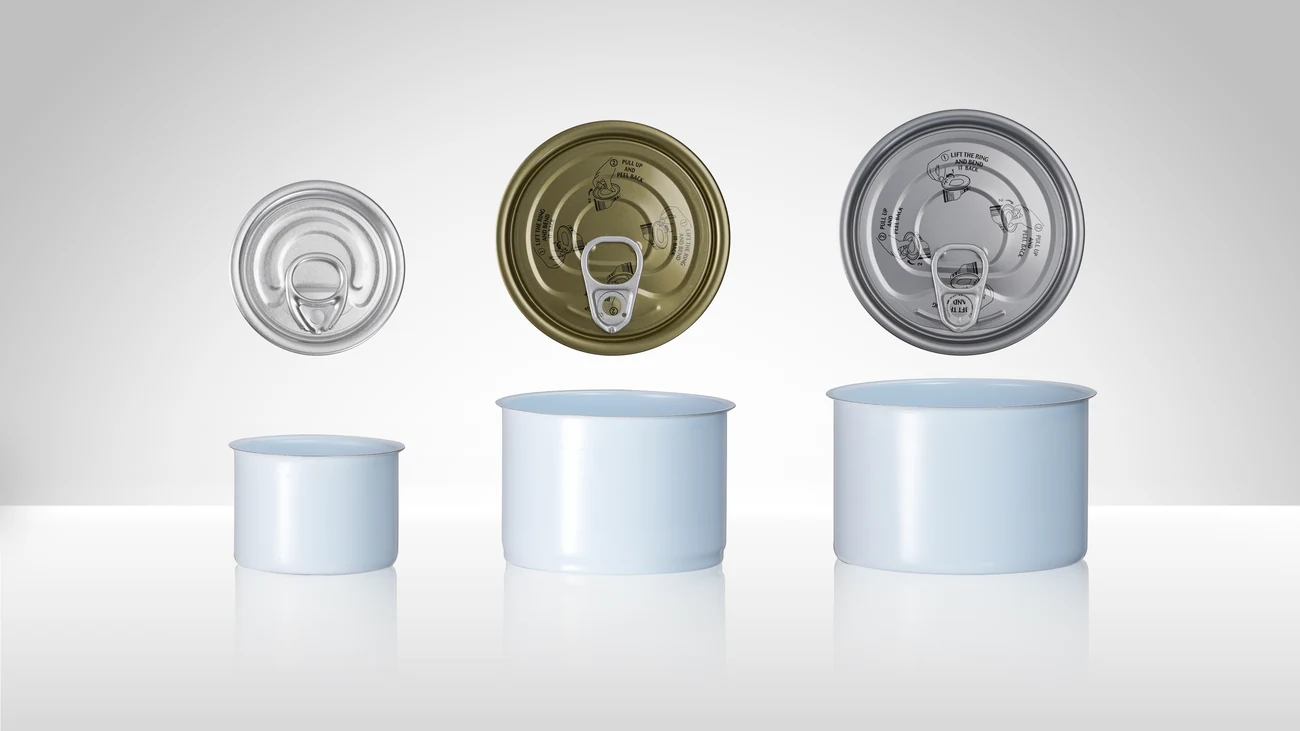
This blog post provides an overview of 2-piece steel cans and their potential use in food packaging applications. It reviews key benefits, technical considerations, internal lining requirements, and market trends currently influencing adoption across the industry.
Executive Summary
Traditionally used in beverage packaging, 2-piece steel cans are now used throughout the food industry. Advances in manufacturing and internal lining technologies have expanded the range of products that can be supported, with increasing evaluation across categories such as soups, beans, sauces, and tomato-based products.
2-piece steel cans offer several potential benefits, including reduced material usage, lighter package weight, and manufacturing efficiencies. However, they are not a one-size-fits-all solution. The suitability of the format depends on the product, processing requirements, shelf-life expectations, and operational considerations. As packaging requirements continue to evolve, many manufacturers are evaluating where 2-piece steel cans may provide the greatest value while maintaining product protection and performance.
Summary of Key Considerations
This section highlights key findings related to 2-piece steel cans, including potential benefits, technical considerations, and evolving industry trends.
- Europe continues to lead packaging sustainability initiatives, with steel packaging recycling rates reaching approximately 82% in 2023 and increasing regulatory focus on BPA and food-contact materials.
- In North America, interest in 2-piece steel cans continues to grow, although adoption is often balanced against operational performance, equipment compatibility, and overall cost considerations.
- Retort performance remains one of the most important technical considerations, as the can must maintain structural integrity and vacuum performance throughout thermal processing.
- Material reduction opportunities must be balanced against structural performance, as excessive lightweighting can impact dent resistance, stacking strength, and overall package durability.
- Potential benefits include reduced package weight, transportation efficiencies, high-speed manufacturing capabilities, and improved material utilization.
What Are 2-Piece Steel Cans?
A 2-piece steel can is made from just two components: the can body and the lid. The body of the can is formed from a single piece of steel, creating a can with no side weld. The lid is then attached after the product is filled.
By eliminating the side seam, manufacturers can reduce material usage while maintaining the strength and durability required for filling, processing, transportation, and shelf-life performance.
Key features of a 2-piece steel can:
- Typically lighter than traditional food cans
- Designed to maintain strength while using less material
- Suitable for high-speed manufacturing operations
- Compatible with a variety of food-grade internal coatings
- Commonly used where manufacturers are looking to improve packaging efficiency and sustainability
Common Food Applications
Historically, 2-piece steel cans have been used primarily in beverage applications. However, ongoing improvements in can manufacturing and internal coating technologies have expanded their potential use in food packaging. Today, many manufacturers are evaluating 2-piece steel cans as a way to reduce material usage, improve logistics efficiency, and support broader sustainability initiatives while maintaining product protection and shelf life.
Today, 2-piece steel cans are used or being considered for a variety of food categories, including:
- Soups
- Beans and legumes
- Ready meals
- Tomato products
- Pasta products
- Sauces and gravies
Key Advantages of 2-Piece Steel Cans
2-piece steel cans offer several potential advantages that have contributed to their use across a range of food and beverage applications.
The table below outlines some of the key benefits commonly associated with this format.
| Potential Benefit | Overview |
|---|---|
| Lightweighting & Material Reduction | Because the can body is formed from a single piece of steel, 2-piece cans can often be produced using less material than conventional formats. This can help reduce package weight while maintaining the strength needed for filling, processing, transportation, and distribution. |
| Transportation Efficiency | A lighter package can contribute to transportation efficiencies throughout the supply chain. Reduced package weight may help lower freight costs and support efforts to reduce transportation-related emissions. |
| Sustainability | Using less material without compromising package performance can help support sustainability goals. For many manufacturers, reducing steel usage is one way to improve packaging efficiency while lowering overall material consumption. |
| Manufacturing Efficiency | The absence of a side seam creates a simplified can body design. Modern manufacturing lines are capable of producing large volumes at high speeds, making the format attractive for high-volume applications. |
| Package Appearance | The seamless can body provides a smooth and uniform appearance. This can offer aesthetic advantages and support branding opportunities. |
Technical Considerations
While 2-piece steel cans offer a number of potential benefits, successful implementation requires careful evaluation of product requirements, processing conditions, and supply chain demands. As with any packaging change, maintaining product protection and package performance remains critical throughout the manufacturing process.
The table below highlights some of the key technical and operational considerations that should be evaluated when assessing the suitability of 2-piece steel cans for food applications.
| Consideration | Why it Matters | Areas for Evaluation |
|---|---|---|
| Retort & Processing Performance | The can must withstand thermal processing without compromising performance. |
|
| Structural Strength & Distribution Performance | The can must withstand handling, transportation, and storage conditions. |
|
| Lightweighting Limitations | Material reduction should not negatively impact package performance. |
|
| Manufacturing Compatibility | The can should be compatible with existing operations and equipment. |
|
Internal Linings
While steel provides the strength and durability required for food packaging, most food cans also require an internal protective coating, commonly referred to as a lining. These coatings create a barrier between the food product and the metal surface, helping to protect both the can and the product throughout its shelf life.
The importance of internal linings becomes even greater for products that contain high levels of acidity, salt, sulfur compounds, oils, or fats, as these ingredients can interact with the metal over time if not properly protected.
Internal linings help to:
- Prevent corrosion and rust formation
- Protect product quality, taste, and appearance
- Maintain food safety throughout shelf life
- Reduce the risk of product-to-metal interactions
- Support long-term package integrity during storage and distribution
Common internal lining technologies include epoxy, polyester, acrylic, organosol, and BPA-NI coating systems. Different food products place different demands on packaging materials and coating systems. As a result, the selection of an internal lining is typically based on the product formulation, processing conditions, and shelf-life requirements.
The table below provides examples of common coating considerations for selected food categories.
| Product | Internal Lining Requirement | Common Liners Used |
|---|---|---|
| Tomato-based Products | Resistance to acids, oils, seasonings, and complex formulations | Organosol, BPA-NI, selected polyester systems |
| Beans | Resistance to sulfur-containing compounds | Epoxy, BPA-NI, selected organosol systems |
| Soups | Resistance to salt, fats, and complex formulations | Polyester, epoxy, BPA-NI systems |
Europe Vs North America
Regulatory requirements, sustainability expectations, and packaging priorities continue to evolve across global markets. While many of the technical requirements for food packaging remain similar, Europe has generally taken a more aggressive approach to sustainability initiatives, material transparency, and food-contact regulations. Understanding these regional differences can help provide context when evaluating future packaging trends and opportunities for 2-piece steel cans.
| Category | Europe | North America |
|---|---|---|
| Sustainability Pressure | Packaging reduction, recyclability, and sustainability targets are increasingly influencing packaging decisions across the region. | Sustainability remains important, but adoption is often driven by customer requirements, corporate goals, and economics. |
| BPA Regulations | The EU has adopted Regulation 2024/3190, restricting BPA and other hazardous bisphenols in food-contact materials, including can coatings. | BPA use continues to be regulated, but restrictions are generally less extensive than those currently being implemented in Europe. |
| Lightweighting Adoption | Manufacturers have been more aggressive in pursuing material reduction and packaging optimization initiatives. | Lightweighting efforts continue, but adoption is often balanced against operational performance and cost considerations. |
| Recycling & Circularity Expectations | Steel packaging recycling rates in Europe reached approximately 82% in 2023, supporting strong circular economy initiatives. | Recycling remains an important focus, although expectations and infrastructure can vary by region and state/province. |
| Food-Contact Regulations | Increasing focus on understanding exactly what materials are used in food packaging and limiting certain substances. | Continued focus on ensuring packaging materials are safe and perform as intended for food-contact applications. |
Conclusion
2-piece steel cans are receiving increased attention across the food packaging industry as manufacturers continue exploring opportunities to improve packaging efficiency, reduce material usage, and support sustainability initiatives. Advancements in manufacturing technologies and internal lining systems have expanded the range of food applications that can be supported, making 2-piece steel cans a viable consideration for selected product categories.
While the format offers potential benefits such as lightweighting, transportation efficiencies, manufacturing advantages, and material reduction, successful implementation requires careful evaluation of product requirements, processing conditions, and operational capabilities. Factors such as retort performance, structural durability, internal lining compatibility, and equipment compatibility remain important considerations when assessing suitability for food applications.
As regulatory expectations and sustainability goals continue to evolve, particularly across European markets, interest in packaging formats that support efficiency and material optimization is expected to continue growing. Any evaluation of 2-piece steel cans should be approached on a product-by-product basis to ensure food safety, product quality, package performance, and operational requirements are maintained throughout the supply chain.