

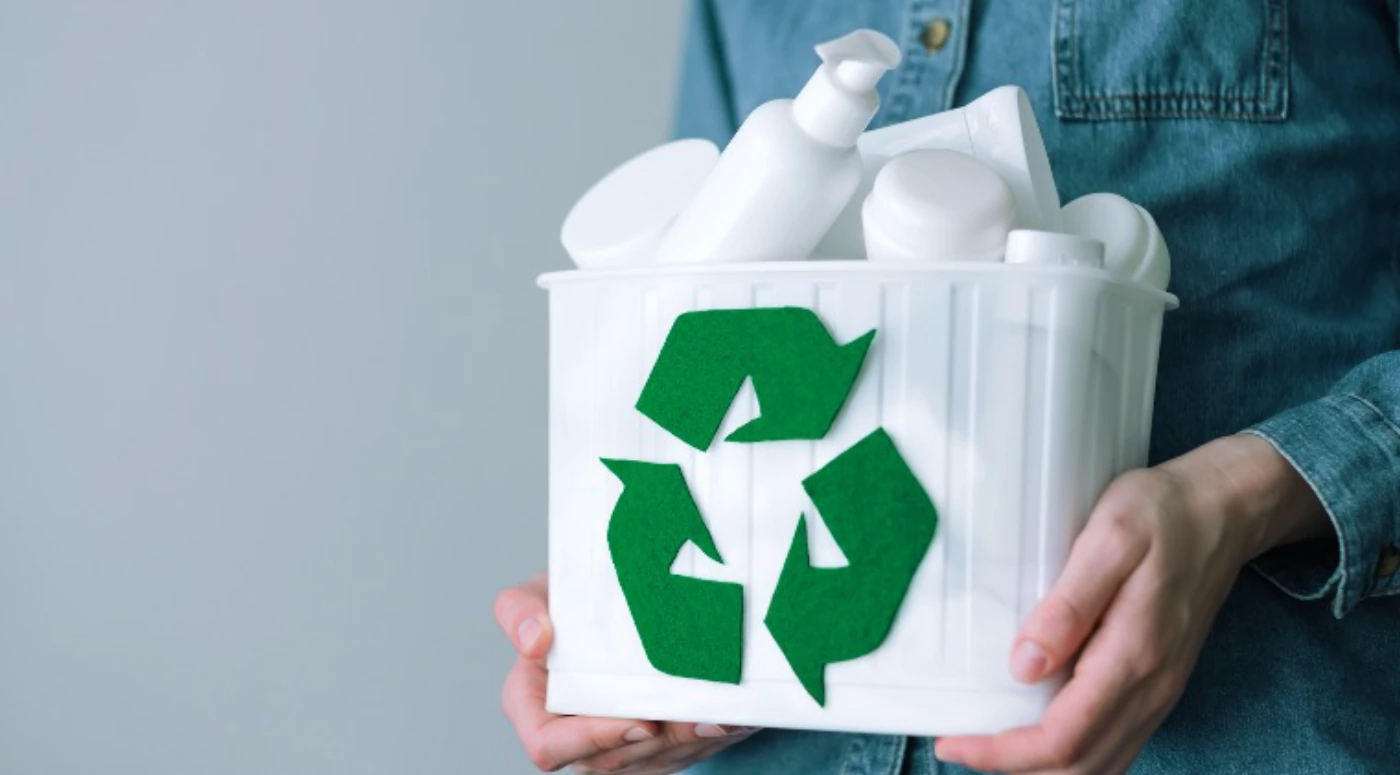
Innovation in dispensing has increasingly centered on sustainability — an area that presents distinct engineering challenges. Pumps and sprayers are complex, multi-component assemblies, combining metal springs, mixed resins, and small precision parts that historically limited recyclability and compatibility with existing recovery streams.
In response, leading manufacturers have invested heavily in R&D to redesign dispensing systems from the inside out. As sustainability standards rise and formulations grow more specialized, advancements in mono-material construction, PCR integration, and mechanical refinement are reshaping how pumps and sprayers are engineered — balancing recyclability, material reduction, and performance without compromising dosage accuracy or durability.
Mono-Material
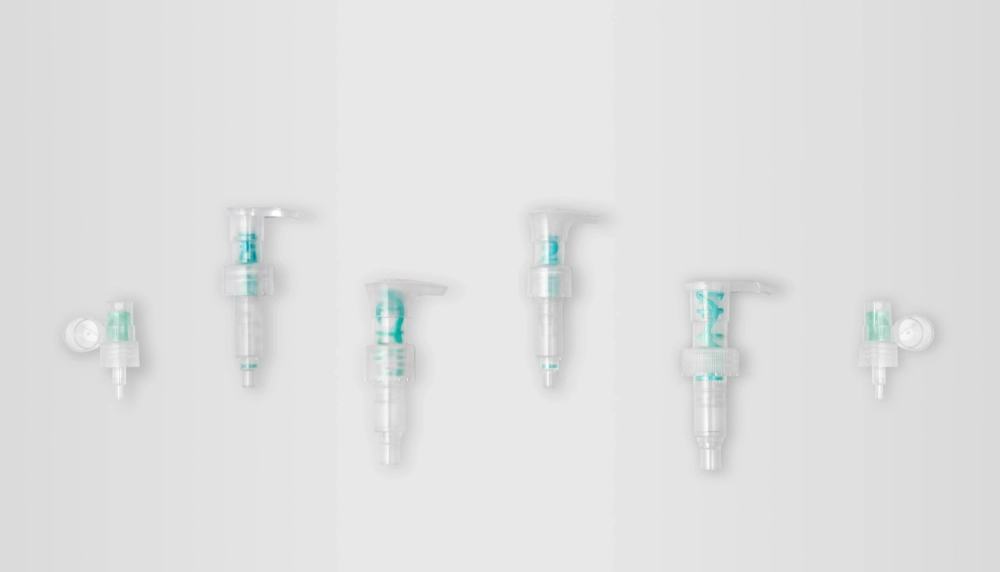
A key innovation in dispensing pumps is converting traditionally multi-material assemblies into mono-material systems — most notably by eliminating the metal spring and replacing it with an engineered polymer spring.
Historically, the metal spring created recycling challenges, requiring separation during processing and often limiting the pump’s compatibility with standard recycling streams. Today’s all-plastic designs allow the full pump to be recycled. This advancement materially improves recyclability while maintaining performance standards for dosage accuracy, priming, and durability.
The Association of Plastic Recyclers (APR) certification is a critical validation in this space, confirming through third-party testing that the design is compatible with existing recycling infrastructure and does not contaminate the recycling stream. Evergreen offers a full portfolio of recyclable pumps and sprayers — including APR-certified options — helping brands align performance, sustainability, and compliance with evolving circularity standards.
PCR Inclusion

PCR – the incorporation of post-consumer recycled resin – is another important sustainability lever in dispensing. Unlike mono-material redesign, it represents an incremental improvement, as the fundamental pump architecture remains unchanged.
Rather than re-engineering the full assembly, manufacturers increase recycled content in select plastic components where mechanical performance, dimensional tolerances, and aesthetics can be maintained. The most common components include the collar/closure, actuator, and overcap, where PCR inclusion can reach up to 100% in certain formats. Depending on the configuration, this can drive total system PCR content above 50%. However, highly engineered internal components – such as springs or precision sealing elements – typically require virgin resin due to their critical functional demands.
Because PCR claims vary based on resin source and chain-of-custody controls, GRS (Global Recycled Standard) certification plays a vital role. Similar to how APR certification validates recyclability, GRS provides third-party verification of recycled content and traceability throughout the supply chain – ensuring sustainability claims are credible and auditable.
Duo Diptube Systems
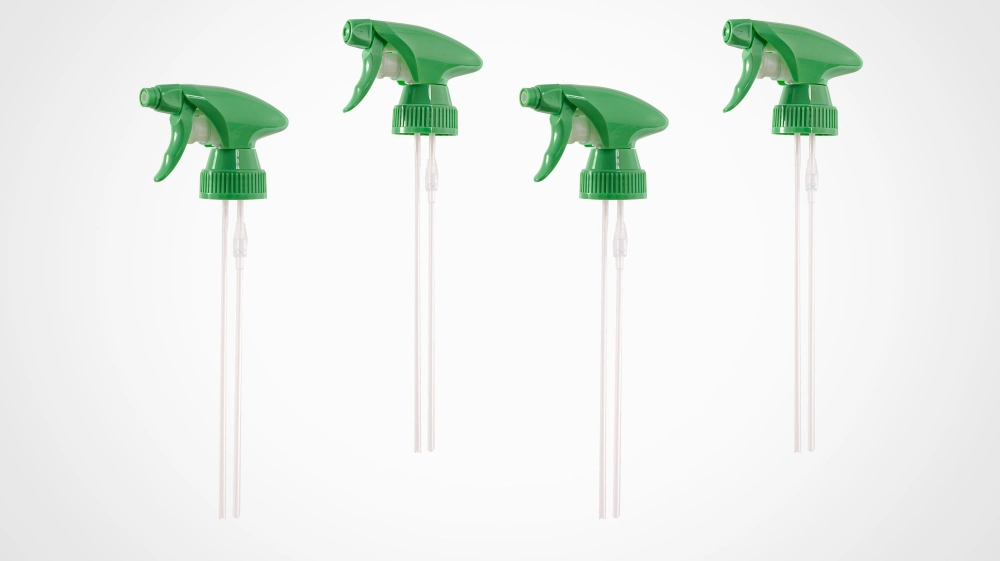
Another significant advancement in dispensing is the development of dual dip tube trigger sprayers engineered for in-bottle dilution systems. Unlike traditional sprayers that draw from a single bottle, this design incorporates two independent dip tubes inserted into a dual-chamber bottle – one chamber containing concentrated formulation and the other filled with water.
The trigger mechanism is engineered to pull concentrate and water simultaneously at a precisely controlled ratio, delivering a ready-to-use solution at the point of dispense. Once the water chamber is depleted, the consumer simply refills it with tap water and continues using the same bottle and sprayer. This significantly extends the lifecycle of both the bottle and dispensing system, reducing plastic consumption, lowering shipping weight, and minimizing overall packaging waste.
From an engineering standpoint, this is highly complex. The system must maintain consistent ratio accuracy across high production volumes, varying consumer spray pressures, and repeated use over the product’s full lifespan. Precision fluid control, seal integrity, and long-term mechanical reliability are critical to ensuring performance does not drift over time. When executed properly, dual dip tube technology enables true concentrate models without compromising user experience – representing a meaningful step forward in sustainable dispensing design.
The Evolving Role of Dispensing Systems
Dispensing systems are no longer just a component within a package — they are central to how products perform, how sustainability goals are achieved, and how brands deliver on consumer expectations. What was once viewed primarily as a functional mechanism is now a critical engineering platform where material science, mechanical design, and circularity strategy intersect.
Mono-material construction addresses recyclability at the structural level. PCR integration improves material circularity within existing architectures. Dual dip tube systems rethink how and where dilution occurs, extending product and packaging lifecycles altogether. Each innovation tackles sustainability from a different angle — design simplification, material substitution, and system-level use reduction — demonstrating that progress in dispensing is both incremental and transformative.
As regulatory scrutiny increases and brands set more aggressive sustainability targets, the technical performance of pumps and sprayers will continue to carry greater strategic importance. Success requires balancing recyclability, verified recycled content, dosing precision, durability, and consumer experience — without compromise.
Evergreen partners with leading global manufacturers to bring these next-generation dispensing solutions to market. Through technical expertise, certification alignment, and a deep understanding of performance requirements, we help brands select and implement dispensing systems that meet both operational and sustainability objectives with confidence. To continue the conversation, connect with a packaging expert through our Get Started page to discuss what may align best with your product line.