


This guide provides a structured overview of the primary plastic closure types used with glass containers. It explains how each closure functions, where it is typically applied, and how sealing mechanisms—such as molded thread engagement and liner compression—interact with glass neck finishes. The guide also outlines key dimensional and performance considerations, including thread series compatibility, finish geometry, torque application, and liner selection. The objective is to support packaging and quality teams in evaluating plastic closure systems systematically and minimizing risks related to leakage, torque relaxation, dispensing inconsistency, and consumer dissatisfaction.
Key Characteristics
Plastic closures used on glass containers are characterized by lightweight construction, cost efficiency, and high design flexibility. They are generally more economical than metal closures, especially in high-volume applications, and allow for a wide range of functional features such as tamper-evident bands, child-resistant mechanisms, flip-tops, droppers, and dispensing systems. Their resealability makes them well suited for products intended for repeated consumer use, including food, beverages, nutraceuticals, personal care, and household liquids.
From a packaging standpoint, plastic closures are commonly applied on continuous thread (CT) glass finishes and are compatible with automated high-speed capping lines. Performance depends on proper thread alignment, liner selection, and torque control to ensure reliable sealing. Overall, plastic closures offer a balance of cost, functionality, consumer convenience, and production efficiency when properly validated with the corresponding glass finish.
Plastic Closure Types
Plastic Continuous Thread (CT) Screw Caps
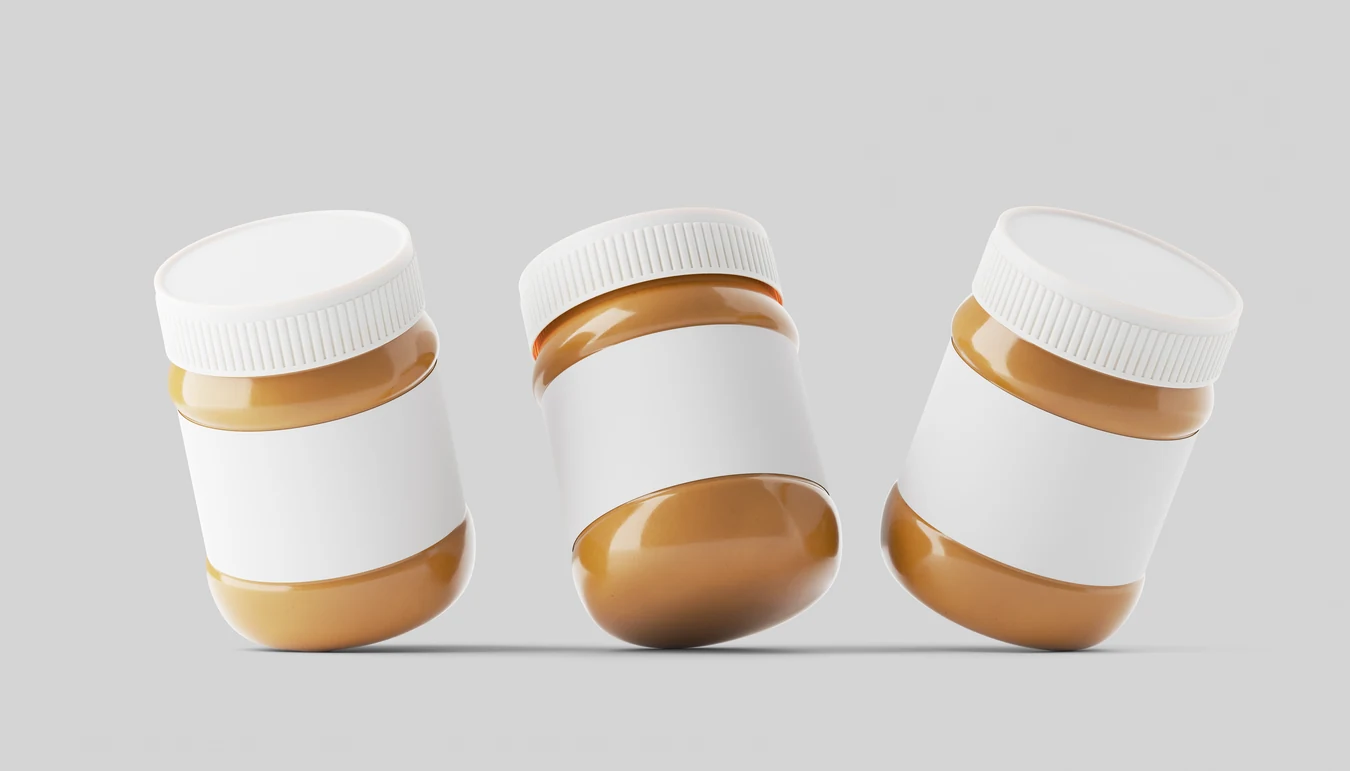
Plastic continuous thread (CT) screw caps are lightweight, reclosable closures with molded threads that engage the glass finish to apply sealing force through a liner. They are widely used across food, personal care, and household products where ease of use, design flexibility, and cost efficiency are important.
- Common diameters: 18 mm, 20 mm, 24 mm, 28 mm, 33 mm, 38 mm, 45 mm
- Common thread series:
- 400 series (single-turn thread)
- 410 series (1.5-turn taller profile)
- Used across food, personal care, supplements, and household products
Child-Resistant Closures (CRC)

Child-resistant closures (CRC) are specialized caps designed to prevent access by children while remaining usable for adults, typically using push-and-turn or squeeze-and-turn mechanisms. They are commonly used for pharmaceuticals, supplements, and regulated products and rely on precise interaction between the cap, liner, and glass finish to meet safety standards.
- Common sizes: 20-400, 24-410, 28-400, 38-400
- Requires precise interaction between cap, liner, and glass finish to meet regulatory standards (e.g., 16 CFR 1700, ISO 8317)
Dispensing Caps, Droppers, and Pumps
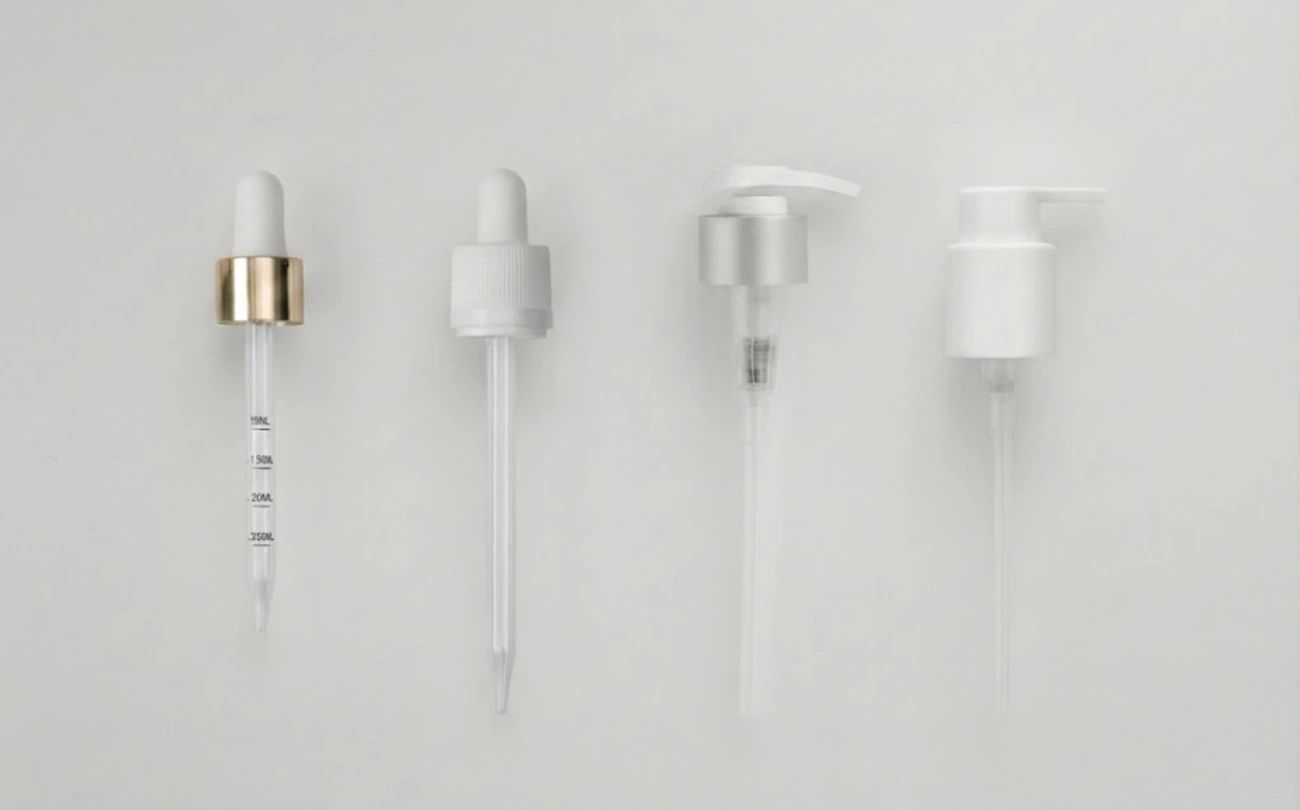
Dispensing caps, droppers, and pumps are functional closures designed to control product flow and improve dosing accuracy. They are commonly used for liquids and semi-liquids and require precise alignment with the glass finish to ensure proper sealing and consistent dispensing performance.
- Typically paired with 18 mm, 20 mm, 24 mm, or 28 mm CT finishes
- Performance highly dependent on thread alignment and finish height consistency
Considerations
- Lower inherent barrier properties compared to metal closures
- More susceptible to torque relaxation over time, especially under temperature cycling
- Sealing performance relies heavily on liner selection, compression, and glass finish flatness
Plastic closures provide versatility, reclosability, and integrated functionality, making them well suited for consumer-focused and regulated applications. For glass packaging systems, successful performance depends on precise thread matching, consistent finish dimensions, and validation through torque and sealing trials. Early coordination between the glass and closure specifications is essential to minimize leakage risk, torque instability, and field complaints.
FAQ
What are the main types of plastic closures used on glass bottles and jars?
The most common plastic closures used on glass packaging include continuous thread (CT) screw caps, child-resistant closures (CRC), and dispensing systems such as droppers and pumps. Each type interacts with the glass neck finish through molded thread engagement and liner compression. At Evergreen, we evaluate closure type selection based on product category, regulatory requirements, and long-term sealing performance.
How do plastic continuous thread (CT) caps seal on glass finishes?
Plastic CT caps seal by engaging the molded internal threads of the cap with the external threads of the glass finish. When properly torqued, the liner compresses against the glass sealing surface to create a seal. Performance depends on correct thread series matching (e.g., 400 vs 410), proper finish dimensions, and torque control during application—areas Evergreen carefully reviews during compatibility validation.
What is the difference between 400 and 410 thread series?
The 400 series features a single-turn thread profile, while the 410 series typically has a taller, 1.5-turn profile that provides greater thread engagement and improved torque retention. Selecting the correct thread series is critical to ensure proper engagement, sealing consistency, and consumer ease of opening.
When should a child-resistant closure (CRC) be used on glass packaging?
CRC caps are required for products regulated under standards such as 16 CFR 1700 or ISO 8317, commonly including pharmaceuticals, nutraceuticals, and certain chemical or household products. These closures rely on precise interaction between the cap mechanism, liner system, and glass finish geometry. Evergreen supports customers by confirming dimensional alignment before regulatory performance testing.
Are plastic closures more cost-effective than metal closures?
In many high-volume applications, plastic closures are generally more economical than metal closures due to lower material cost, lighter weight, and efficient molding processes. They also offer integrated features such as tamper-evident bands or dispensing components, which can reduce secondary assembly steps.
What causes torque relaxation in plastic closures?
Torque relaxation occurs when applied torque decreases over time due to material creep, temperature cycling, or liner compression loss. Plastic closures are more susceptible to torque relaxation than metal closures. To minimize risk, Evergreen recommends torque retention studies under real-world storage and distribution conditions.
How important is liner selection for plastic closures on glass?
Liner selection is critical. The liner material determines chemical compatibility, compression behavior, oxygen barrier performance, and sealing reliability. Factors such as glass finish flatness, product formulation, fill temperature, and storage conditions must all be considered during liner specification to prevent leakage or product degradation.
How do you ensure proper compatibility between a plastic cap and a glass neck finish?
Compatibility should be verified through dimensional review (T, E, S, and H measurements), thread profile confirmation, torque testing, vacuum or pressure trials (if applicable), and aging studies. Early coordination between glass and closure specifications significantly reduces leakage risk and consumer complaints. Evergreen’s packaging and quality teams typically validate these factors before commercial production to ensure reliable field performance.